
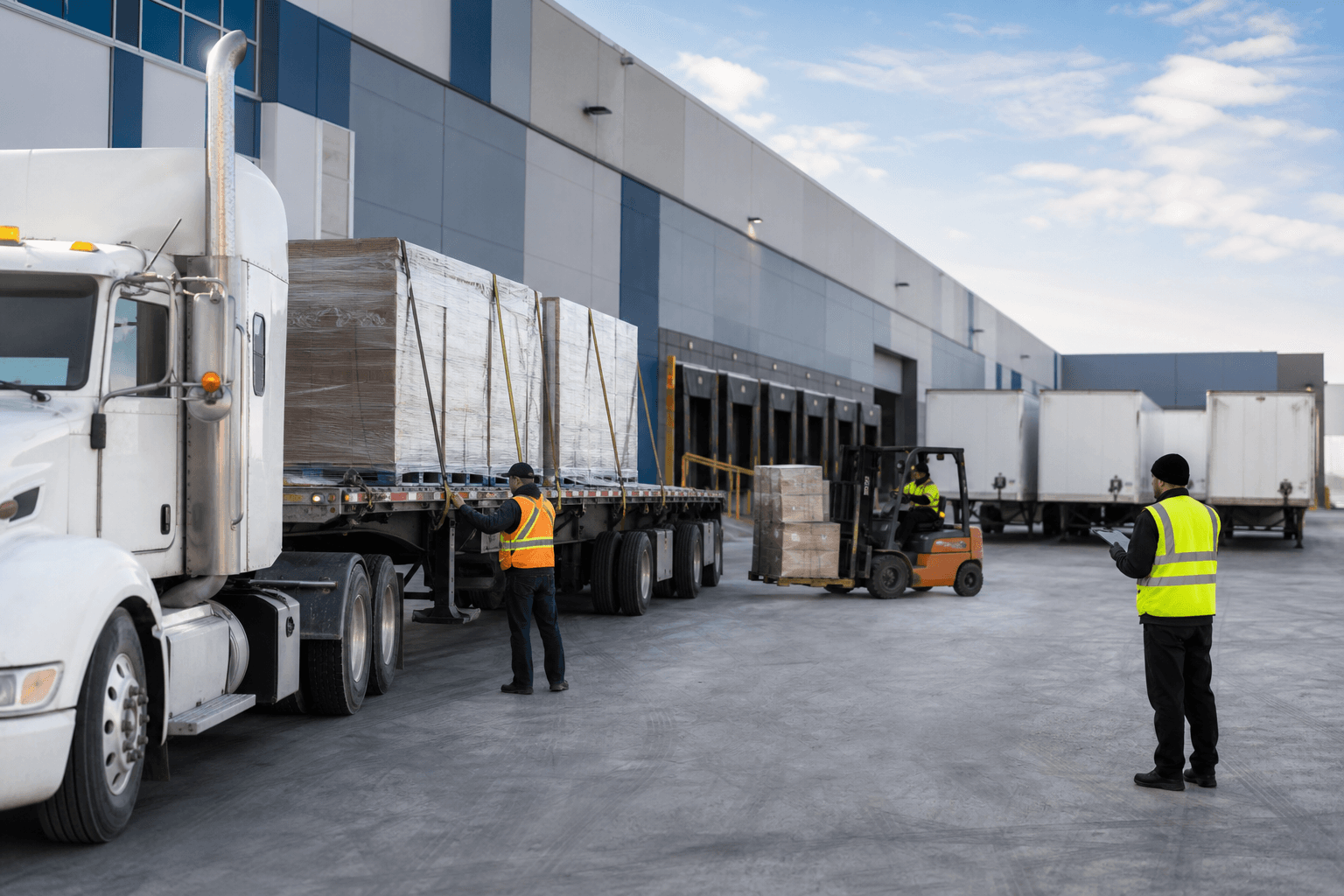
Cross-docking moves freight from an inbound vehicle toward outbound delivery with little or no conventional storage in between. Instead of holding goods for later distribution, the operation coordinates receiving, checking, sorting, staging, and dispatch around the next transportation movement. The Canadian Transportation Agency describes cross-docking as moving goods directly from a receiving dock to a shipping dock to reduce storage expense.
The practical choice is whether your freight and delivery plan are synchronized enough for a direct transfer. If timing, destinations, and shipment information are clear, cross-docking may reduce storage and handling requirements. If freight must be held, redistributed later, or managed as inventory, conventional warehousing may be the better fit.
Cross-Docking vs. Warehousing: The Decision to Make First
Cross-docking is a transfer model. Freight arrives at a facility, is directed through the operation, and leaves on an outbound movement rather than being placed into long-term storage. In a conventional warehouse model, goods are held until a later delivery, order, production, or distribution decision.
| Consideration | Cross-docking | Warehousing |
|---|---|---|
| Primary purpose | Move freight between inbound and outbound transportation | Hold, manage, and access freight over time |
| Dwell time | Designed to be limited and tied to the next movement | Can continue until inventory or delivery is required |
| Best fit | Coordinated shipments with known destinations and timing | Freight with uncertain timing, split distribution, or inventory needs |
| Main operational demand | Accurate information and synchronized transportation | Storage planning, inventory control, and later order fulfillment |
Neither option is automatically better. Cross-docking can limit the need for storage and additional handling, while warehousing provides more flexibility when inbound and outbound plans do not align. Flying Falcon’s cross-docking service description explains the model as using one side of a warehouse for inbound items and another for outbound items.
1. Pre-Arrival Planning Aligns the Freight and Delivery Plan

The workflow starts before the freight reaches the facility. The shipper and logistics provider need a shared understanding of what is moving, where it is coming from, where it must go, and how the inbound and outbound transportation legs should connect.
Prepare the freight description, dimensions, weight, quantity, origin, destination, preferred timing, and delivery requirements. Also identify whether the movement is LTL, TL, containerized, oversized, or otherwise specialized. For Canada-wide or cross-border freight, provide the relevant route and destination context early so the transportation plan can be assessed as a whole.
2. Inbound Freight Arrives and Is Received
At the physical receiving stage, freight reaches the facility and is unloaded into the inbound side of the operation. The shipment is then positioned for the next check and movement rather than automatically being placed into long-term storage.
Clear shipping information matters here. If labels, quantities, destinations, or handling instructions do not match the plan, the freight may require additional clarification before it can be sorted and sent onward. Confirming these details before arrival helps reduce avoidable disruption in the transfer process. Transport Canada’s cross-docking definition likewise centers on the movement from a receiving dock to a shipping dock.
3. Freight Is Verified, Sorted, and Consolidated
After receiving, freight is checked against the delivery plan and separated according to destination, route, shipment, or onward transportation requirement. Freight may then be consolidated with other compatible shipments where that supports the planned movement.
This stage is particularly relevant to LTL shipping, where a shipment occupies only part of a trailer rather than the entire available capacity. Flying Falcon describes its LTL service for smaller freight weighing between 150 and 15,000 pounds and occupying part of a standard trailer. TL freight may follow a simpler transfer path when the full load is moving to one destination, but it still requires accurate coordination between inbound and outbound transport.
4. Freight Is Briefly Staged or Routed to Storage When Needed
Cross-docking aims to minimize dwell time, but it does not mean every shipment moves instantly or without exceptions. Freight may need brief staging when inbound and outbound movements do not arrive at the same time, when delivery information is incomplete, or when the next vehicle or destination is not ready.
Temporary storage can also become appropriate when the shipper needs inventory held, delivery timing changes, or freight must be split across destinations. In those situations, warehouse management solutions can help coordinate storage, loading, unloading, cross-docking, and distribution rather than forcing every shipment into a direct-transfer model.
Flying Falcon states that freight may remain in the warehouse for only a few hours when cross-docking is performed properly, but that should not be treated as a universal service promise. Actual dwell time depends on the freight, timing, destination plan, and any additional coordination required.
5. Outbound Freight Is Loaded and Dispatched
Once freight is sorted and ready for its next movement, it moves to the outbound side of the operation. It is loaded for the appropriate destination or route and dispatched according to the agreed transportation plan.
This final stage connects the cross-dock with the larger delivery network. Flying Falcon describes cross-docking for LTL and TL pickup and delivery, including Canada-wide and cross-border freight. That description supports using cross-docking as part of a broader freight plan, but it does not remove the need to confirm route, timing, shipment details, and any requirements specific to the movement.
How LTL, TL, Container, and Specialized Freight Fit the Workflow
LTL freight is a natural candidate for consolidation because several partial shipments may be organized by destination or route before outbound delivery. The benefit is not automatic, however. Freight still needs compatible handling requirements, clear identification, and a delivery plan that supports consolidation.
TL freight may move through the same type of facility when an inbound load must connect with an outbound movement, but a full load may require less consolidation than LTL. Containers, steel, heavy machinery, oilfield equipment, agricultural machinery, and grain or seed freight require more careful review of dimensions, weight, loading requirements, destination, and timing before the workflow is selected.
Flying Falcon identifies LTL and TL pickup and delivery, steel containers, Canada-wide freight, and cross-border freight among its cross-docking services. These are service categories to discuss during planning, not a substitute for reviewing the details of a particular shipment.
Cross-Docking Benefits and Tradeoffs to Weigh
A well-designed cross-docking process can reduce the need to place freight into storage, limit some material-handling stages, and support consolidation before outbound delivery. It may also connect inbound and outbound transportation more directly when the shipment plan is well synchronized.
The tradeoff is coordination. Cross-docking depends more heavily on accurate freight information, aligned transportation timing, known destinations, and readiness for the next movement. If a delivery date changes or a destination is uncertain, the shipment may require staging, storage, or a revised logistics plan. Avoid choosing cross-docking solely because it sounds faster or less expensive. The right model depends on whether the operational conditions support a direct transfer.
Cross-Docking Services Checklist for Shippers
Before requesting a cross-docking service or quote, gather the following information. Each detail helps determine whether the freight can move directly or needs storage and additional coordination.
- Freight description: Explain what is being shipped, including whether it is a container, steel product, machinery, oilfield equipment, agricultural freight, or another specialized load.
- Dimensions and weight: Provide measurements, total weight, piece count, and any unusual shape or handling consideration.
- Shipment type: State whether the move is LTL, TL, containerized, expedited, or part of a wider distribution plan.
- Origin and destination: Identify pickup and delivery locations, including multiple destinations if consolidation or split distribution is involved.
- Inbound and outbound timing: Explain when the freight will arrive and when it needs to continue. Timing alignment is central to a direct-transfer workflow.
- Handling requirements: Note any loading, unloading, protection, equipment, or site-access considerations that affect the movement.
- Storage requirements: Say whether the freight may need temporary staging, longer-term storage, inventory access, or release in separate portions.
- Pickup and delivery expectations: Provide the required service sequence and any delivery constraints that could affect dispatch planning.
- Cross-border context: Identify whether the freight will move between Canada and the United States so the full transportation plan can be reviewed.
When Warehousing May Be the Better Option
Choose conventional warehousing or a combined warehousing and transportation plan when freight must be held for an uncertain period, released in stages, distributed to multiple destinations over time, or managed as inventory. Warehousing is also more appropriate when inbound arrival and outbound delivery cannot be synchronized reliably.
Cross-docking and warehousing can work together. Freight may be cross-docked when the next movement is ready, while other goods are stored until a later delivery or distribution decision. Flying Falcon offers Edmonton-area warehousing, storage, loading, unloading, cross-docking, and distribution support, which gives shippers a way to discuss the workflow rather than choosing a transfer model in isolation.
Frequently Asked Questions
What is the difference between cross-docking and warehousing?
Cross-docking is designed to move freight from inbound transportation to outbound transportation with limited dwell time. Warehousing holds freight for later access, distribution, production, or delivery. A shipment may use both when some freight is ready to move and other freight must be stored.
How long does freight usually remain at a cross-docking facility?
There is no universal time that applies to every shipment. Cross-docking is intended to minimize dwell time, and Flying Falcon describes freight as potentially remaining for only a few hours when the process is properly coordinated. Timing depends on inbound arrival, outbound readiness, freight details, and exceptions.
Can LTL shipments use a cross-docking workflow?
Yes, LTL shipments can be considered for cross-docking when their destinations, handling needs, and timing support sorting or consolidation. LTL freight occupies only part of a trailer, so accurate identification and a clear outbound plan are especially important.
Is cross-docking suitable for container or steel freight?
It may be suitable, but the decision depends on the freight’s dimensions, weight, handling requirements, destination, and timing. Provide those details before booking so the transportation and facility workflow can be assessed properly.
When should a shipper choose temporary storage instead?
Temporary storage is worth considering when the outbound vehicle is not ready, delivery timing is uncertain, destinations are split, inventory must remain accessible, or the freight needs additional coordination before dispatch. In those cases, warehousing may support the shipment more effectively than direct cross-docking.
Choose the Workflow That Matches the Freight
Cross-docking works best when inbound and outbound movements can be planned together, freight information is complete, destinations are known, and storage is not the primary need. Warehousing offers more flexibility when freight must be held, released in stages, or managed as inventory. The most useful first step is to compare the shipment’s timing, handling requirements, destinations, and storage needs against both workflows.
For cross-docking, LTL, TL, warehousing, and related freight planning across Canada and the United States, contact Flying Falcon Logistics Ltd with the shipment details needed to assess the right movement plan.


