
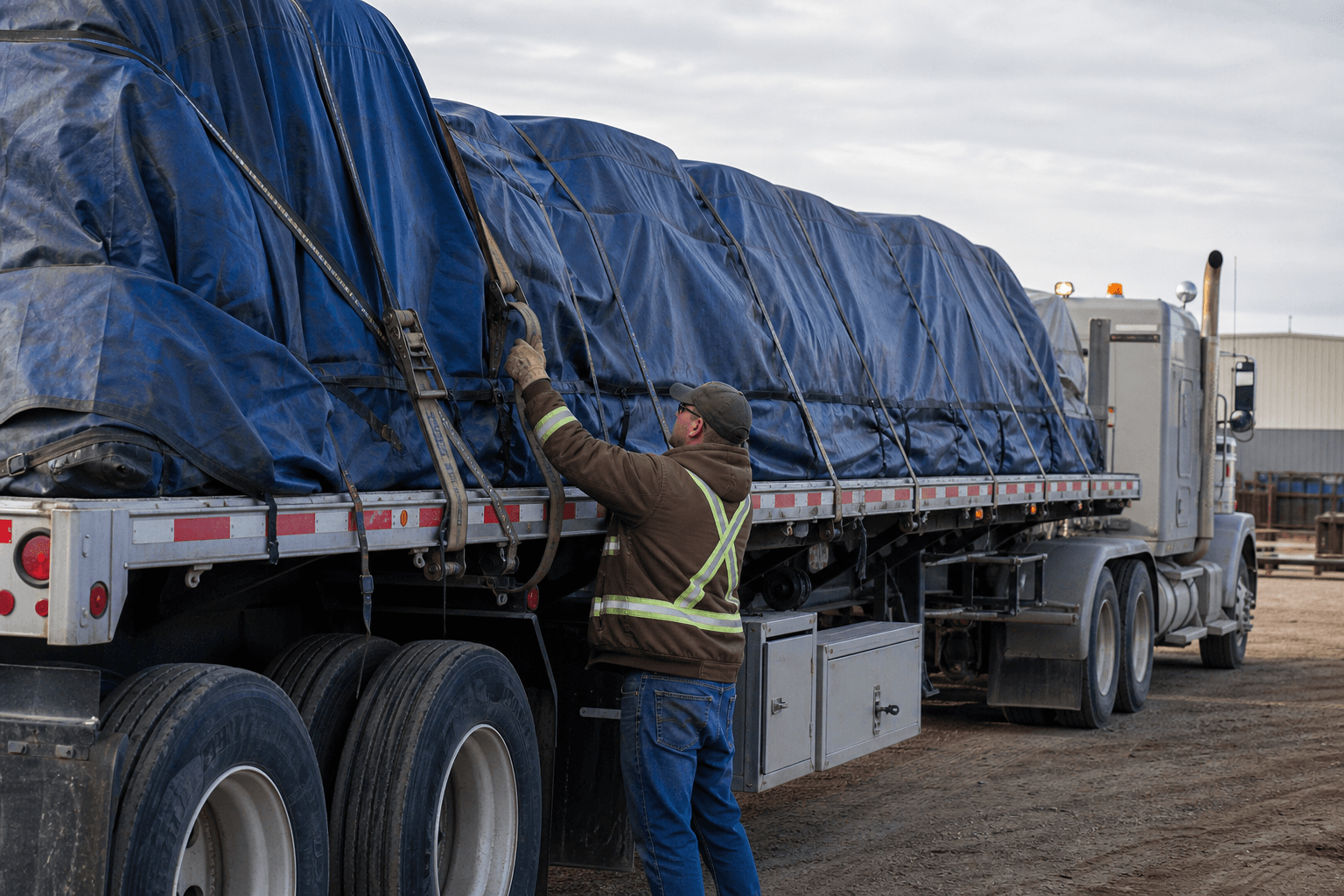
Which Details Matter Before Booking Load Tarping Services?
Before booking load tarping services, confirm exactly what the provider will do, whether your freight is suitable for covered open-deck transport, who handles loading and securement, what insurance applies, and how pickup and delivery will be coordinated. Tarping is only one part of an open-deck transportation plan.
Also confirm that the carrier offers tarp installation or related work. Flying Falcon Logistics Ltd is an asset-based flatbed and specialized freight carrier, but the supplied business information does not verify dedicated load tarping or tarp installation. Ask directly about availability while assessing the underlying transportation requirement.
Quick Summary

- Confirm whether the quote includes the tarp, installation, removal, securement, and transportation.
- Share accurate commodity, dimensions, weight, loading, route, and timing details.
- Determine whether the shipment needs flatbed, wide-load, heavy-haul, or hot shot expedited service.
- Clarify insurance, tracking, delivery communication, and cross-border responsibilities.
- Ask about warehousing, storage, or cross-docking when direct delivery is not practical.
What Exactly Is Included in the Load Tarping Service?
“Load tarping services” can mean different things. One provider may supply and install a tarp, while another may expect the shipper or driver to provide equipment and complete part of the preparation. A transportation quote may cover the trailer and delivery but exclude tarp rental, installation, removal, or loading assistance.
Ask whether the service includes the tarp, who installs and removes it, where the work occurs, whether loading assistance is included, and what happens if the freight cannot be safely covered. Get these details in writing, including exclusions and assumptions. Do not assume that a flatbed carrier automatically provides tarp installation or a particular type of weather protection.
Have You Described the Freight Precisely Enough?

A general description such as “machinery” or “industrial parts” is rarely enough to assess equipment, handling, tarping, and delivery requirements. Share the commodity, dimensions, weight, shape, loading method, and features that affect covering.
Oilfield equipment, containers, steel pipe, heavy machinery, grain, and seed may require different transportation discussions. Sharp edges, exposed components, unusual height, fragility, and limited access can affect whether covering is practical.
- Provide piece count, total weight, individual dimensions, and photos or drawings where useful.
- Explain whether loading occurs from the side, rear, or top.
- Identify cranes, forklifts, docks, site restrictions, and appointment requirements.
- State whether the freight is weather-sensitive or must remain accessible after covering.
- Include pickup and delivery locations and requested dates.
Does the Load Need Flatbed, Wide-Load, or Heavy-Haul Handling?
Tarping does not determine the full transportation plan. A shipment may need standard flatbed transport, specialized equipment, wide-load transportation, heavy haul, or route planning based on its loaded dimensions and weight. Covering a load does not remove the need to assess its overall transport characteristics.
Ask the carrier to review loaded height, width, length, weight, equipment suitability, and route requirements. If the freight is oversized or unusually heavy, confirm who handles applicable transportation details. This article is not legal or regulatory advice, so discuss route and permit requirements with the carrier and relevant authorities.
Flying Falcon provides open-deck transportation across Canada and the United States, including long-haul, short-haul, LTL, hot shot expedited, and wide-load or heavy-haul services. Review its long-haul flatbed services and wide-load transportation information when defining the underlying service. These pages do not confirm dedicated tarping or tarp installation.
Who Is Responsible for Loading and Securement?
Establish who prepares, loads, secures, inspects, and adjusts the freight if conditions change. Responsibilities may involve the shipper, loading site, driver, carrier, or several parties. They should not be left to assumption.
Ask what the driver needs at pickup, whether the site has suitable equipment and access, whether the driver participates in inspection, and how discrepancies between the declared and actual load will be handled. Confirm responsibilities before dispatch, especially for heavy, irregular, fragile, or difficult-to-access freight.
What Freight Insurance and Liability Details Apply?
Ask what freight insurance applies, what it covers, and which exclusions or conditions may affect a claim. Confirm the documentation process, damage-reporting contact, declared value requirements, and whether the commodity or loading method affects coverage.
Flying Falcon’s supplied business information states that it provides freight insurance. Confirm applicable limits, terms, exclusions, and the claims process directly because those details are not specified here. Insurance does not replace suitable packaging, loading, securement, or communication.
How Will Pickup, Transit, and Delivery Timing Be Managed?
Discuss pickup readiness, loading time, transit, delivery appointments, and communication if conditions change. Tarping may require additional handling time or access to the load. Ask whether standard flatbed, short-haul, long-haul, or hot shot expedited service best fits the route and urgency.
Ask whether tracking is available, who provides updates, and how appointment changes are communicated. Flying Falcon states that it offers shipment tracking resources and reports a 98% on-time delivery record. This is a company performance claim, not an individual-shipment guarantee. Its flatbed service information can help frame a discussion about open-deck transportation and service areas.
Does the Shipment Require Cross-Border or Multi-Leg Coordination?
For Canada-USA freight, provide the origin, destination, preferred border crossing if known, freight description, and requested dates. Ask who coordinates the transportation plan, documentation responsibilities, truck or facility handoffs, and communication if border-related delays affect delivery.
Clarify whether the move is direct or changes trucks or facilities, and whether one provider coordinates both portions. Include these responsibilities and assumptions in the quote rather than relying on a general statement that the carrier serves both countries.
Will Warehousing or Cross-Docking Be Needed?
Some freight cannot move directly from pickup to final delivery because a project site is not ready, appointments do not align, or several shipments must be combined. Ask about interim warehousing, storage, container handling, logistics planning, or cross-docking.
Flying Falcon offers warehousing, storage, logistics planning, and LTL and TL cross-docking services in the Edmonton area. These are related logistics capabilities, not confirmation of dedicated tarping. Ask how storage or transfer would affect covering, inspection, insurance, timing, and final delivery.
What Should You Include in a Quote Request?
- Pickup and delivery locations, including countries for cross-border freight.
- Commodity, piece count, dimensions, weight, photos, or drawings.
- Loading and unloading methods, site equipment, access restrictions, and appointments.
- Weather sensitivity and exactly what you expect from tarping.
- Potential need for flatbed, wide-load, heavy-haul, or expedited equipment.
- Requested dates, flexibility, insurance questions, declared value, and special handling needs.
- Any warehousing, storage, cross-docking, or multi-leg requirements.
Ask the provider to identify inclusions, exclusions, and pricing assumptions. You can request a freight quote from Flying Falcon for the relevant transportation or logistics requirement, while confirming tarping availability directly.
A Final Booking Checklist for Open-Deck Freight
- Tarp supply, installation, removal, and transportation scope are confirmed.
- Commodity, dimensions, weight, and loading details are accurate.
- Equipment matches the load and any wide-load or heavy-haul requirements.
- Loading, inspection, and securement responsibilities are clear.
- Insurance terms, exclusions, documents, and claims contacts are understood.
- Pickup, transit, delivery, tracking, and delay communication are agreed.
- Cross-border responsibilities and handoffs are identified where relevant.
- Storage or cross-docking is arranged if direct delivery is not practical.
If any answer is unclear, pause before dispatch. Clarifying the scope during quoting can prevent a mismatch between the service ordered and the freight’s actual needs.
Frequently Asked Questions
Does every flatbed load need to be tarped?
No. The need depends on the freight, weather sensitivity, shape, access requirements, and transportation plan. Ask the carrier to assess the specific shipment instead of assuming every flatbed load needs the same treatment.
Is load tarping the same as wide-load transportation?
No. Tarping concerns covering or protecting freight. Wide-load transportation concerns freight that requires specialized dimensional planning. A shipment may need one, both, or neither.
What should I ask about insurance before booking?
Ask what coverage applies to the commodity and route, what exclusions exist, what documents are required, and who handles damage reports. Confirm limits and claims procedures directly with the provider.
When should I consider warehousing or cross-docking?
Consider these options when the receiving site is not ready, appointments do not align, freight must be consolidated, or the move requires multiple legs. Ask how the freight will be protected, inspected, loaded, and insured during storage or transfer.
Make the Transportation Scope Clear Before You Book
Evaluate load tarping by separating the covering question from the broader transportation decision. Confirm what the provider will supply and perform, then match the freight to the appropriate flatbed, wide-load, heavy-haul, expedited, warehousing, or cross-docking solution.
Flying Falcon Logistics Ltd is an asset-based carrier based in Nisku, Alberta, serving Canada and the United States with flatbed and specialized freight transportation. Contact Flying Falcon Logistics Ltd to discuss your open-deck transportation or logistics needs, and confirm directly whether load tarping is available for your shipment.


