
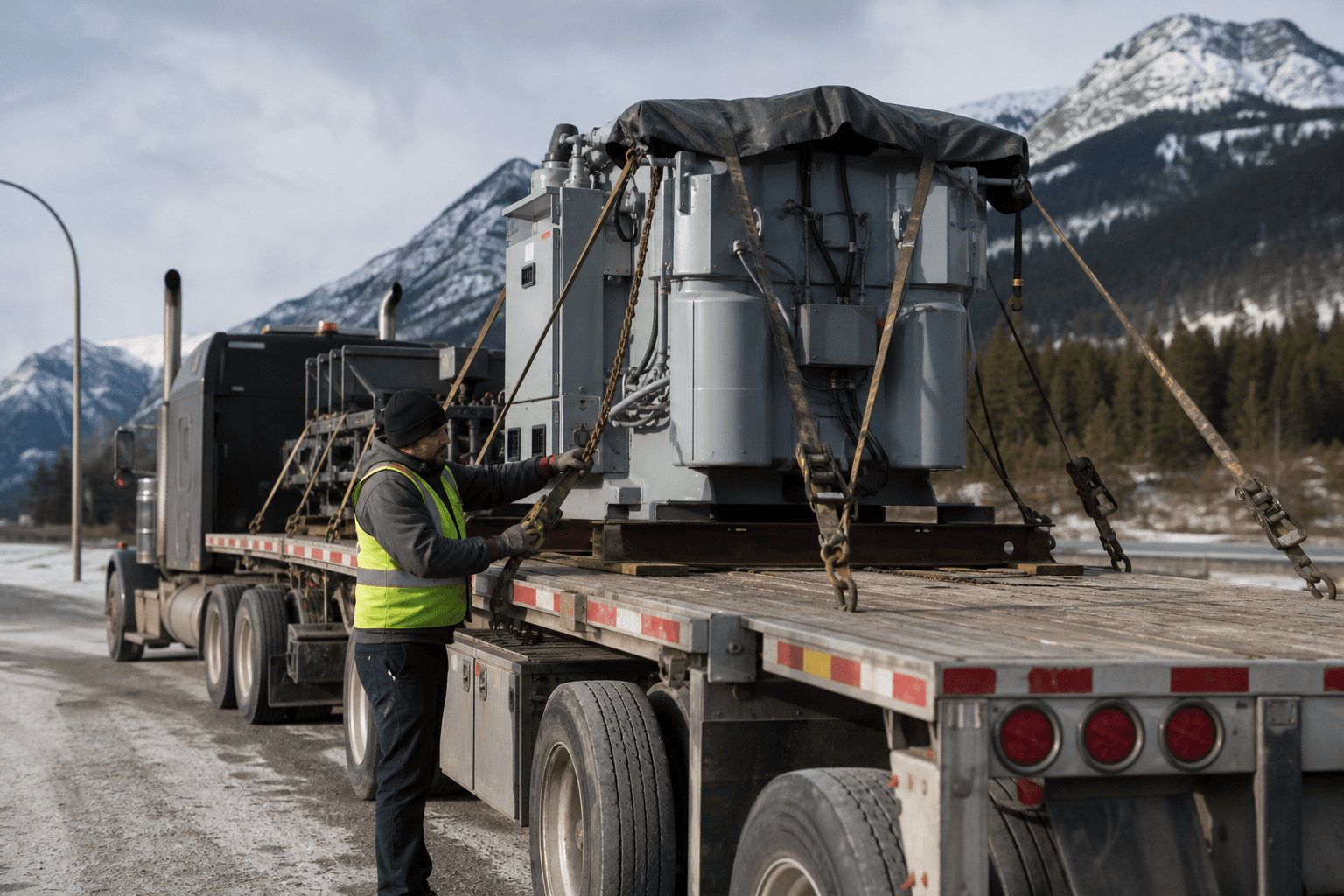
Flatbed transport works best when the shipment is planned before the truck arrives. Accurate freight details, a realistic securement plan, safe loading conditions, route review, and clear communication help the carrier choose suitable equipment and reduce avoidable delays.
The shipper, carrier, loading site, and receiving site each have a role in preparing the move. These flatbed transport best practices provide a practical checklist for heavy, oversized, irregular, or open-deck freight.
Quick summary

- Record the freight's dimensions, weight, shape, loading method, locations, timing, and unusual handling needs.
- Plan how the load will be protected from shifting, tipping, falling, leaking, spilling, or becoming dislodged.
- Confirm whether dimensions, weight, route, or jurisdiction create wide-load, permit, escort, or pilot-vehicle requirements.
- Match the shipment to standard flatbed, long-haul, short-haul, LTL, expedited, or specialized service.
- Ask about relevant experience, coverage, insurance, tracking, communication, quote details, and delivery expectations.
1. Document the freight before requesting a quote
A carrier cannot properly assess equipment, pricing, securement, routing, or timing from a description such as “heavy machinery.” Start with the facts that affect the move.
- Dimensions: Record length, width, height, overhang, and parts extending beyond the main body.
- Weight: Provide total weight and, where relevant, how that weight is distributed.
- Shape and stability: Note whether the freight is cylindrical, tall, uneven, fragile, or difficult to position.
- Loading method: Confirm whether the site has a crane, forklift, ramp, loading dock, or other equipment.
- Pickup and delivery conditions: Include addresses, access limits, surface conditions, site hours, and contacts.
- Timing: State the pickup window, delivery requirement, and whether the move is time-critical.
- Freight characteristics: Identify pipes, containers, oilfield equipment, heavy machinery, or agricultural equipment.
Photos, drawings, packing details, and a simple load diagram can clarify issues that measurements alone may miss. If the freight is irregular or may exceed ordinary dimensions, disclose that before the carrier quotes the move.
2. Plan cargo securement around the load

Flatbed load securement is not a final step to improvise after loading. The method must suit the freight's shape, weight, surface, stability, and exposure to movement during transit.
Alberta guidance states that cargo must be secured against shifting, tipping, leaking, spilling, blowing off, falling, or otherwise becoming dislodged. Appropriate methods can include tie-downs, blocking, bracing, friction mats, other cargo, or a combination of these methods. The province's commercial-carrier safety resources address cargo securement and related responsibilities.
Before loading, identify whether the freight is fragile, cylindrical, tall, top-heavy, uneven, loose, packaged in multiple pieces, or exposed to weather. Also identify lifting points and areas that could be damaged by straps, chains, blocking, or contact with other materials.
Do not assume that one securement method or a standard number of tie-downs applies to every shipment. The carrier and qualified loading personnel should confirm the appropriate equipment, placement, ratings, and inspection process for the actual freight.
3. Coordinate safe loading and unloading
Even a well-planned load can become unsafe if the pickup or delivery site is not ready. Canadian guidance recommends identifying hazards, using available safety materials, coordinating with everyone involved, and keeping a safe distance if the load shifts unexpectedly.
Before the truck arrives, confirm who controls the loading area, where the vehicle will position, and how personnel will stay clear of moving equipment or suspended freight. Depending on the operation, useful materials may include chocks, wedges, cradles, shoring bars, tie-down strapping, or dunnage. The specific equipment should reflect the load and site procedure.
Give the driver and site team a shared plan for signals, access, loading sequence, paperwork, and final checks. At delivery, ensure the receiving site has enough space and suitable equipment to unload safely. The Canadian flatbed loading and unloading guidance is a useful reference for identifying these hazards.
4. Review dimensions, route, and wide-load requirements
Width is only one consideration. Height, length, weight, axle distribution, overhang, route restrictions, and local access can all affect whether a shipment needs additional planning. Requirements vary by province, state, route, and load, so do not rely on one universal threshold.
Ask the carrier to review whether the move may involve permits, route checks, travel restrictions, escorts, or pilot vehicles. Confirm who will coordinate those requirements and whether a change to the load or route could alter the plan.
For shipments that exceed standard dimensions, wide-load transport should be discussed before booking. Share exact measurements and route constraints early so the carrier can determine whether the shipment fits a standard flatbed plan or requires a specialized arrangement.
5. Match the service to the shipment
The right flatbed service depends on distance, urgency, freight size, handling complexity, and whether the load can be consolidated.
| Service | May fit when | Confirm before booking |
|---|---|---|
| Standard flatbed | The freight is open-deck compatible without unusual timing or dimensions. | Deck space, loading equipment, securement, weather protection, and access. |
| Long-haul transportation | The shipment moves across provinces or between Canada and the United States. | Route, border documentation, delivery windows, tracking, and communication. |
| Short-haul transportation | The move is local or regional. | Site access, appointment timing, loading sequence, and return requirements. |
| LTL shipping | The freight does not require a full trailer and can be consolidated. | Handling points, packaging, transfer risk, dimensions, and schedule. |
| Hot shot expedited | The freight is time-sensitive and needs a rapid, dedicated response. | Actual urgency, equipment suitability, route timing, and cost implications. |
| Wide-load transportation | Dimensions or weight require regulatory and route planning. | Permits, escorts, pilot vehicles, restrictions, and loading requirements. |
For freight moving across provinces or borders, long-haul flatbed transportation requires clear planning around routes, border coordination, driver communication, and delivery conditions.
6. Use cross-docking or warehousing when timing does not align
Not every shipment should move directly from pickup to the final receiver. A production schedule may change, a customer may not be ready, or several smaller shipments may need consolidation before a full-load move.
Cross-docking can help when freight should move from inbound to outbound transportation with limited storage. Warehousing and storage are more appropriate when freight needs to remain staged longer or inventory timing is uncertain.
Ask whether the facility can accept the freight, what handling is included, how long it may remain there, and how it will be protected and documented. When LTL and full-load movements must connect, cross-docking services may be worth evaluating alongside transportation.
7. Evaluate the carrier before booking
A low initial quote is not enough. Compare how thoroughly each provider understands the load, route, loading site, and consequences of a missed appointment or unsuitable equipment.
- Asset-based capacity: Ask what equipment the carrier operates and which unit suits the freight.
- Relevant experience: Confirm experience with pipes, containers, oilfield equipment, agricultural machinery, or heavy equipment as applicable.
- Coverage: Check service across the required provinces, states, and Canada-US route.
- Securement planning: Ask who reviews the load plan and supplies or confirms materials.
- Communication: Clarify the main contact, update frequency, and escalation process.
- Tracking: Confirm how shipment status is reported during transit.
- Insurance: Ask what freight coverage applies, what exclusions exist, and whether additional coverage is needed.
- Quote clarity: Request assumptions behind the price, including permits, waiting time, storage, border services, and fuel terms.
Flying Falcon Logistics Ltd is an Edmonton-area asset-based Canadian flatbed and specialized freight carrier serving Canada and the United States. Its published freight examples include oilfield equipment, containers, steel pipes, heavy machinery, and agricultural equipment. The company also states that it provides freight insurance and has a 98% on-time delivery track record. These points can inform questions, but the shipment-specific quote and operating plan still need confirmation.
Pre-booking checklist for flatbed freight
- Freight description, quantity, dimensions, total weight, and weight distribution.
- Photos, drawings, packaging details, or a load diagram for unusual freight.
- Center-of-gravity concerns, fragile areas, lifting points, and securement limitations.
- Pickup and delivery addresses, contacts, appointment windows, and access restrictions.
- Available loading and unloading equipment.
- Required delivery timing and whether the move is urgent or flexible.
- Potential oversize, over-height, overweight, or over-length characteristics.
- Route, provincial or state requirements, border needs, and permit questions.
- Whether LTL consolidation, cross-docking, temporary storage, or warehousing is needed.
- Questions about equipment, securement, insurance, tracking, communication, and quote exclusions.
Frequently asked questions
What information should I provide when requesting a flatbed transport quote?
Provide the freight description, dimensions, weight, shape, loading method, pickup and delivery details, timing, route, and unusual securement or handling requirements. Photos or drawings help when freight is irregular or oversized.
When does a flatbed shipment become a wide load?
That depends on the applicable province, state, route, and shipment characteristics. Width, height, length, weight, and overhang may all affect requirements. Ask the carrier to review exact measurements and confirm whether permits, escorts, pilot vehicles, or restrictions apply.
Who is responsible for cargo securement on a flatbed?
Responsibility should be clarified among the shipper, loading personnel, driver, and carrier before loading. Agree on who supplies materials, performs inspections, and can stop loading when conditions are unsafe.
Is cross-docking useful for LTL flatbed shipments?
It can help when smaller shipments need consolidation, transfer between vehicles, or coordination with a full-load movement. Confirm handling procedures, storage time, documentation, and delivery sequencing first.
What should I ask a carrier about cross-border flatbed freight?
Ask about Canada-US coverage, required shipment and customs information, border communication, tracking, insurance, equipment, and responsibility for delays or changed delivery instructions.
Conclusion: Prepare the load before you book the truck
The most useful flatbed transport best practices are decisions made early: document the freight accurately, plan securement around the actual load, prepare safe loading and unloading conditions, review the route, and choose a service that matches distance, urgency, dimensions, and handling complexity.
Before requesting a quote, gather measurements, weight, photos, site details, timing, oversize concerns, cross-border information, and storage or cross-docking needs. Then ask direct questions about equipment, insurance, tracking, communication, securement, permits, and quote assumptions.
When you are ready to discuss a shipment, prepare those details for Flying Falcon Logistics Ltd, an Edmonton-area flatbed and specialized freight carrier serving Canada and the United States.


