
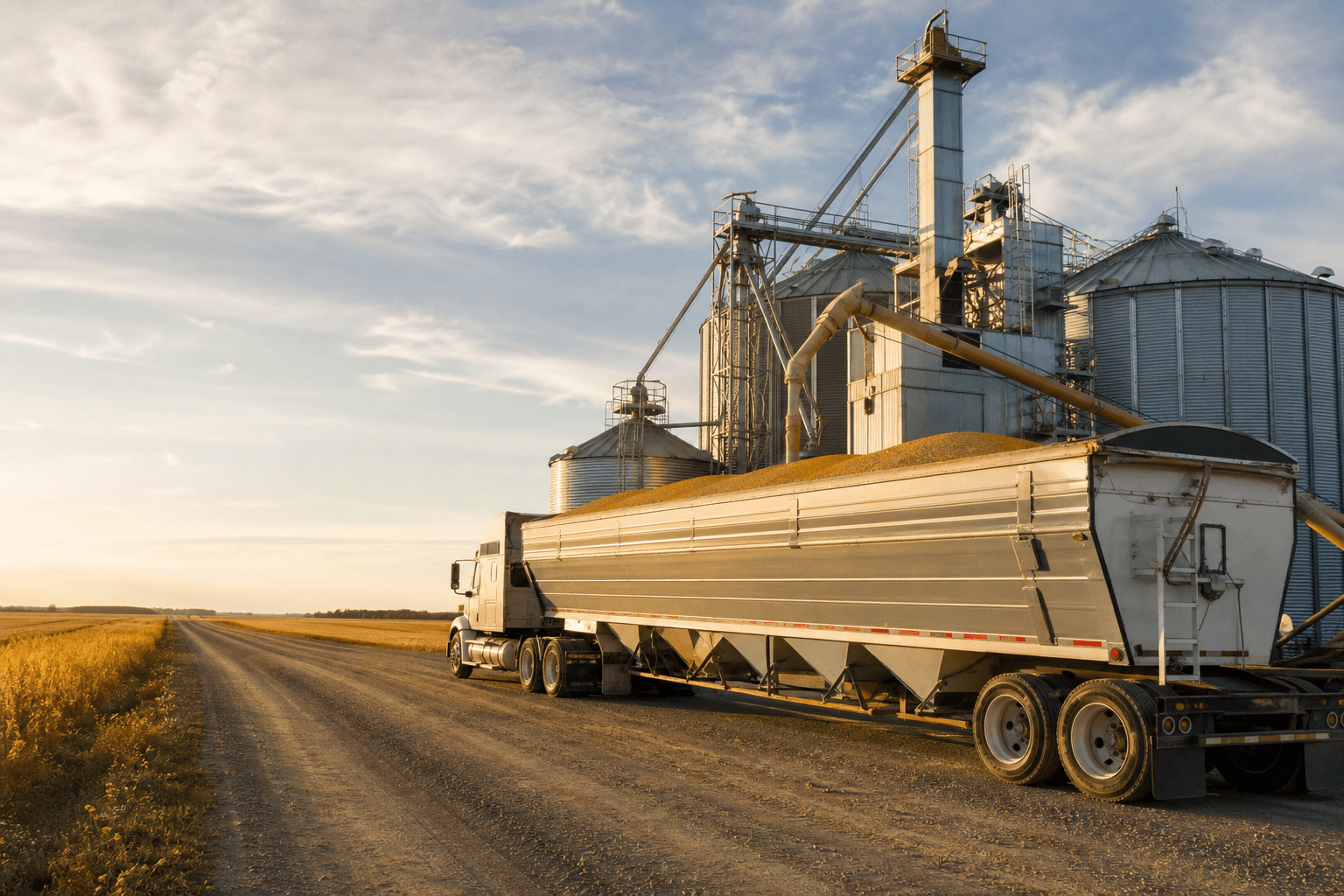
Grain hopper transport seasonality is less about a fixed calendar and more about coordinating several changing conditions at once. During the grain hauling season, harvest activity can increase demand for equipment and delivery capacity, while rural access, destination readiness, storage availability, and road restrictions can affect the plan.
The safest approach is to prepare shipment details before harvest pressure increases, confirm route conditions before dispatch, and decide whether direct delivery, staged handling, temporary storage, or cross-docking best fits the move. Alberta guidance also makes clear that rural routes can involve narrow roads, soft shoulders, washouts, and other hazards, while seasonal axle-weight rules can change during spring thaw.
1. Start with the seasonal transport decision
Begin by identifying the decision your shipment requires. A full hopper moving directly from a farm or loading site to a ready receiver may need a straightforward pickup and delivery plan. An empty hopper moving between fields, facilities, or equipment locations may require different timing and access information.
Harvest-season hopper trucking can also involve competing priorities. The crop may be ready before the receiver can accept it, a destination may have limited unloading availability, or rural conditions may make a particular route unsuitable at a given time. Alberta guidance on grain storage notes that harvested crops may need to be stored when immediate delivery is impractical, so transport should be planned alongside the crop's temporary holding and marketing arrangements.
Stop point: Before asking for a transport plan, decide whether the priority is immediate delivery, equipment repositioning, crop movement, or keeping freight available until the destination is ready. That decision determines which details the carrier needs to assess first.
2. Prepare the shipment before harvest demand increases

Collect the core information before contacting a carrier. Identify the commodity or equipment, whether the hopper is loaded or empty, the origin and destination, and the preferred pickup and delivery windows. If the move involves grain, seed, or another crop, describe the cargo clearly and indicate how it will be loaded and unloaded.
Also confirm whether the shipment requires field-to-field movement, farm-to-facility delivery, or a longer regional or cross-country move. Hopper transport may involve different access conditions at each end, so the carrier should know whether the loading site is a farm, elevator, warehouse, processing facility, or another location.
For background on hopper equipment, unloading arrangements, and agricultural transport considerations, review the grain hopper transportation options available from a specialized carrier. The useful point at this stage is not to assume that every move follows the same pattern. Give the carrier enough information to evaluate the actual shipment.
3. Confirm rural access and seasonal road conditions
Do not treat the origin and destination addresses as sufficient route information. Describe the final approach to each site, including narrow roads, low-clearance areas, bridges, soft shoulders, steep or uneven entrances, washouts, dust, blind corners, and available turning space. Alberta's farm-equipment guidance identifies these as relevant rural transportation hazards, particularly during busy spring and fall farming periods.
Ask the site contact to confirm where the vehicle can safely enter, stage, load, unload, and leave. If the hopper must be pulled through a field or another non-standard surface, disclose that before dispatch rather than treating it as an arrival-day detail.
Stop point: Route suitability must be confirmed for the specific vehicle, load condition, site, and timing. Do not assume that a route used during dry conditions will remain suitable after rain, thaw, or heavy farm activity.
4. Choose the right seasonal delivery option
Once timing and access are understood, compare the available handling options. The right choice depends on destination readiness, storage availability, handling requirements, and how much schedule flexibility the shipment has.
| Option | Best fit | Main tradeoff |
|---|---|---|
| Direct delivery | The receiver is ready and the route is confirmed. | There is less flexibility if the destination cannot accept the shipment. |
| Staged delivery | Pickup and final delivery need to occur in separate planned windows. | It requires more coordination between the parties and may involve an intermediate step. |
| Temporary storage | Immediate delivery is impractical or the destination is not ready. | Storage adds handling, scheduling, and facility considerations. |
| Cross-docking | Freight needs to move between inbound and outbound transportation with minimal storage. | Inbound and outbound timing must be coordinated closely. |
Temporary storage can reduce pressure when harvest activity and destination capacity do not align. A warehouse storage solution may help organize goods until the next shipment window, provided the facility, handling process, and release timing suit the cargo.
Cross-docking can be useful when freight needs to transfer quickly between transport legs. It is different from longer-term storage because the value comes from coordinating inbound receipt and outbound dispatch with limited time at the facility. Confirm the handling requirements, appointment windows, and responsibility for loading and unloading before selecting this option.
5. Coordinate dispatch during the harvest period
During harvest, treat the transport plan as a coordinated schedule rather than a single pickup appointment. Confirm when the crop, hopper, or agricultural equipment will actually be ready, who will authorize loading, and whether the receiver has an appointment or daily intake limit.
Share changes promptly. A delayed harvest, wet field, unavailable loader, full receiving site, or changed delivery window can affect the next movement in the chain. The plan should identify who communicates changes between the farm, carrier, storage facility, cross-dock, and receiver.
Build a practical fallback into the plan. That might mean a revised delivery window, a confirmed temporary holding location, or a second receiving option. A contingency is not a promise that delays will be eliminated. It is a way to avoid making an unplanned decision when conditions change.
6. Recheck plans before spring road restrictions
Spring planning deserves a separate review because Alberta's Seasonal Axle Weight Program changes allowable axle weights during the year. During spring thaw, restrictions may be reduced because weakened road structures are more vulnerable. The exact requirements depend on the applicable route, vehicle, load, and current conditions.
Before a spring move, ask the carrier to confirm whether seasonal axle-weight requirements affect the planned equipment, route, timing, or load configuration. Do not rely on a previous trip or a general assumption about what a road can carry.
This review is especially important when the move involves a rural access road, bridge, soft shoulder, or field entrance. If the route is unsuitable, the plan may need a different approach, a different timing window, an alternative staging location, or confirmation from the relevant authorities and carrier.
7. Prepare a complete hopper transport quote request
A complete quote request helps the carrier assess the move without repeated follow-up. Include the following information:
- Origin and destination: Provide the site address, facility name, or clear location description, including the final approach where relevant.
- Freight status: State whether the hopper is loaded or empty, and identify the grain, seed, crop, agricultural machine, or other freight involved.
- Timing: Give the preferred pickup window, delivery deadline if one exists, and any dates when the site cannot receive the vehicle.
- Access conditions: Describe field entrances, road surfaces, bridges, turning space, soft shoulders, slopes, and seasonal concerns.
- Loading and unloading: Explain what equipment or personnel will be available and whether appointments are required.
- Handling needs: Identify any staging, storage, cross-docking, or transfer requirement before final delivery.
- Route concerns: Flag spring restrictions, unusual road conditions, border crossings, or other known constraints.
- Contacts: List the people responsible for dispatch, loading, receiving, and approving changes.
These details do not replace a carrier's route and equipment review. They give the carrier a clearer starting point and make it easier to identify information that still needs confirmation.
Seasonal grain hopper transport checklist
Use this checklist before dispatch:
- Confirm whether the move is for a loaded hopper, empty hopper, crop, seed, or agricultural equipment.
- Record the exact origin, destination, preferred windows, and any receiver appointment.
- Verify that loading and unloading arrangements are ready.
- Describe rural access, bridges, shoulders, turning areas, field conditions, and alternate approaches.
- Ask whether current or upcoming seasonal axle-weight rules affect the route.
- Choose direct delivery, staged delivery, temporary storage, or cross-docking based on destination readiness.
- Identify a fallback if the receiver, field, road, or storage site becomes unavailable.
- Give dispatch and receiving contacts to everyone involved in the move.
- Reconfirm the plan shortly before pickup if weather, harvest progress, or road conditions have changed.
Frequently asked questions
How far in advance should grain hopper transport be planned for harvest season?
There is no single advance window that fits every shipment. Plan as soon as the likely origin, destination, cargo status, timing, and access conditions are known, especially when the move depends on a narrow harvest window, a specific receiver, or temporary storage. Early planning improves the opportunity to compare direct and staged options, but it does not guarantee equipment availability, rates, or delivery timing.
When does temporary storage make sense for harvested grain or hopper freight?
Temporary storage may be worth considering when immediate delivery is impractical, the receiver is not ready, or harvest timing does not align with transportation and intake capacity. Alberta recognizes storage as relevant when crops cannot be delivered immediately. Compare the additional handling, storage cost, access, release timing, and crop-management implications before choosing it.
How can spring axle-weight restrictions affect grain hopper transportation in Alberta?
Spring thaw can lead to lower allowable axle weights under Alberta's Seasonal Axle Weight Program because roads may be more vulnerable. The impact depends on the route, vehicle, load, and current restrictions. Ask the carrier to verify the planned route and equipment before dispatch rather than assuming that a previous seasonal move remains acceptable.
What information should be included when requesting a grain hopper transport quote?
Include the origin and destination, loaded or empty status, cargo description, preferred pickup and delivery windows, access conditions, loading and unloading arrangements, route concerns, storage or cross-docking needs, and the relevant site contacts. Mention field access, narrow roads, bridges, soft shoulders, and spring conditions when applicable. Complete information helps identify what still requires route-specific confirmation.
Plan around conditions, not just the harvest date
Successful grain hopper transport planning connects harvest timing with the realities of the route and destination. Prepare the shipment information early, confirm rural access, compare direct delivery with staged handling or storage, and build a fallback for changing conditions. Before spring moves, revisit axle-weight requirements and road vulnerability instead of relying on a general calendar.
For grain hopper transportation, agricultural machinery moves, loaded or empty hopper transfers, and related freight planning across Alberta and Western Canada, contact Flying Falcon Logistics Ltd with the shipment details needed to assess the move.


