
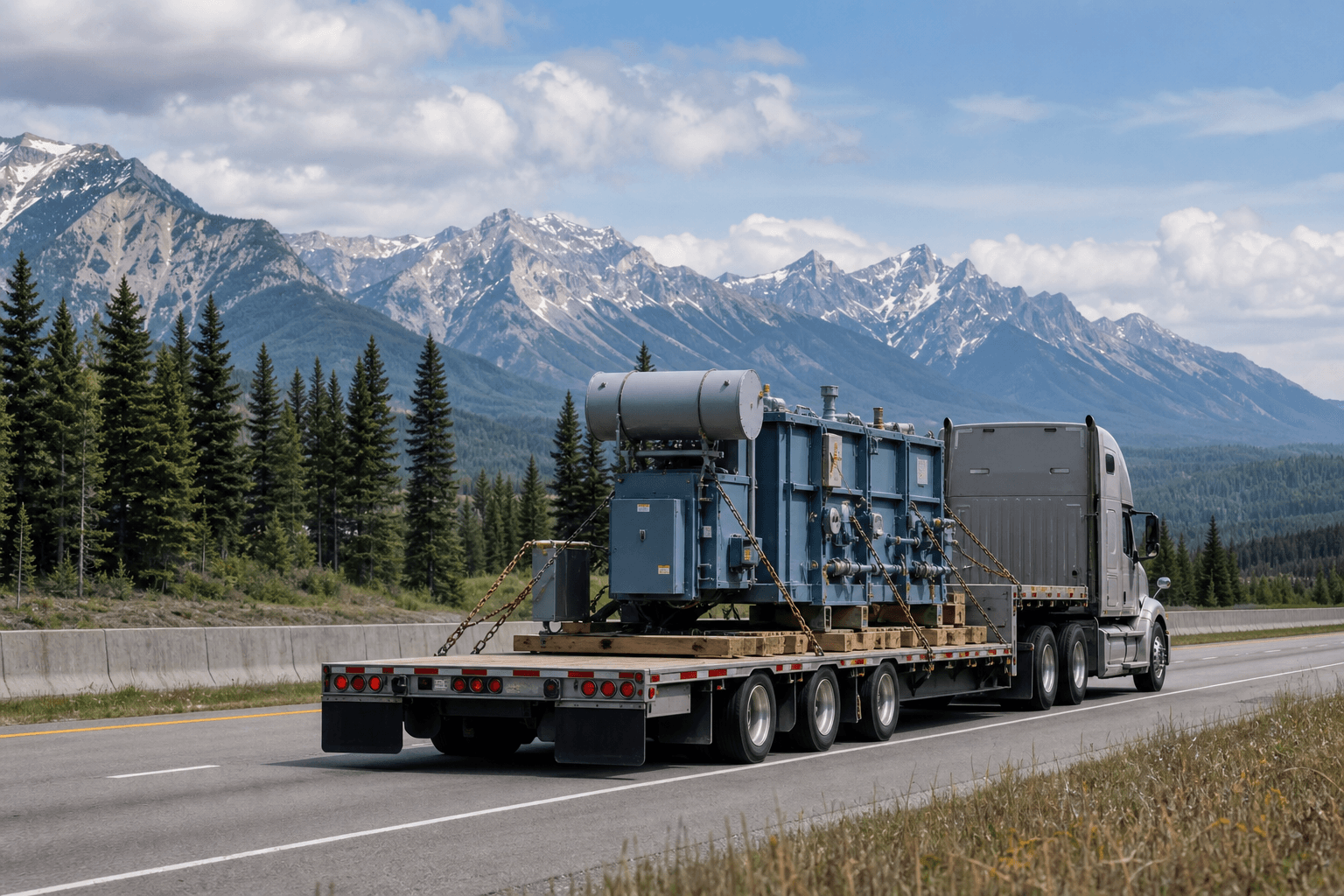
Reliable long-haul transportation route planning starts with the shipment, not the shortest line on a map. Freight dimensions, weight, loading method, delivery access, timing, border requirements, and road conditions can all change which route and service are suitable.
The process below gives shippers and logistics managers a practical sequence for planning Canadian and Canada-US freight. It also explains when standard flatbed, LTL, hot-shot expedited, wide-load, or warehousing support may be the better fit.
Step 1: Build a complete shipment profile
A route cannot be evaluated properly until the carrier understands what is moving. Start with the exact pickup and delivery locations, including the site entrance, loading area, and unloading point where available.
Record the freight description, piece count, length, width, height, total weight, weight per piece, and whether the dimensions change when the load is placed on the trailer. Also note the loading method, unloading equipment, center of gravity, tie-down or tarp requirements, and whether the shipment is fragile, temperature-sensitive, regulated, or classified as dangerous goods.
Alberta's commercial-carrier education materials address areas such as weights and dimensions, hours of service, cargo securement, and dangerous goods. Use the applicable regulations and carrier guidance for the shipment rather than treating a general checklist as a compliance determination. Review Alberta's commercial-carrier education manual when identifying questions for your carrier.
Shipment information checklist
- Pickup and delivery addresses, site contacts, and operating hours.
- Freight description, piece count, dimensions, weight, and photographs where useful.
- Loading and unloading equipment, site access limitations, and appointment requirements.
- Requested pickup and delivery windows, including any production or project deadlines.
- Border information for Canada-US shipments, including the parties responsible for commercial documents.
- Known permit, escort, pilot-car, securement, or inspection questions.
- Storage, transloading, cross-docking, or interim delivery needs.
Stop point: Do not select a route or request a firm quote using only a commodity name and destination. Missing dimensions or access details can invalidate an otherwise reasonable plan.
Step 2: Decide what kind of move the freight requires

The right transportation service affects the route, timing, equipment, handling plan, and cost structure. A full flatbed move may be appropriate for one large piece, while several smaller pieces could be consolidated through LTL. An urgent replacement component may require hot-shot expedited service, while oversized equipment may need a dedicated heavy-haul review.
Flying Falcon provides long-haul and short-haul transportation, LTL, hot-shot expedited moves, wide-load transportation, warehousing, storage, and logistics services. Its long-haul flatbed operation serves Canada and the United States and handles freight such as steel-related products, oilfield equipment, oversized cargo, heavy farm equipment, and industrial generators.
Use the following questions to narrow the service fit:
- Standard flatbed: Is the freight suitable for ordinary open-deck loading and legal road movement without unusual dimensions?
- LTL shipping: Is the shipment smaller than a full truckload, and can its handling and delivery requirements accommodate consolidation?
- Hot-shot expedited: Is the shipment time-critical enough to justify an expedited planning discussion?
- Wide-load or heavy-haul: Do the loaded dimensions or weight require permits, escorts, pilot cars, route restrictions, or additional approvals?
- Warehousing or cross-docking: Do pickup and delivery schedules differ, or does the freight need temporary storage or transfer between transportation legs?
Step 3: Map the route around freight constraints
Once the shipment is classified, compare route options against its physical and operational requirements. A shorter route may include a low-clearance structure, a restricted road, unsuitable access, construction, difficult turns, or a border crossing that does not fit the delivery schedule.
For oversized or overweight freight, check whether the proposed route connects with suitable high-load corridors. Alberta identifies priority economic corridors and a High Load Corridor Network that supports the movement of oversize and overweight loads. This does not make every corridor suitable for every shipment, so the route still needs to be reviewed against the load's actual dimensions and weight. See Alberta's information on economic corridors and high-load routes.
For Canada-US shipments, confirm that the carrier serves both the origin and destination markets and can coordinate the cross-border portion of the move. Flying Falcon's long-haul trucking service areas include Canada and the United States, with stated experience in specialized freight and oversize-load logistics.
Evaluate each route for clearance, legal dimensions, axle and weight considerations, road geometry, delivery-site access, construction, border requirements, fuel and rest planning, and the availability of an alternate route. Avoid calling any route “best” until these factors have been checked against current information.
Step 4: Check current highway and border conditions
Route planning is a moving decision. A route that works during initial planning may be affected by construction, an incident, weather, road restrictions, or border delays close to dispatch.
For Alberta movements, 511 Alberta provides official information about highway conditions, construction zones, roadwork, major incidents, special events, border wait times, cameras, and highway messages. Check 511 Alberta highway information during planning and again near departure. Its route-planning help also explains how to enter start and end locations and compare generated routes.
Use this information to identify current risks, not to promise an exact arrival time. Confirm who will monitor conditions after dispatch, how the driver or dispatcher will communicate a disruption, and when the shipper will be notified of a material change.
Step 5: Confirm permits, escorts, and approvals for specialized loads
Oversized and overweight freight needs an early compliance review. Alberta establishes commercial-vehicle weight and dimension limits, and some loads may be eligible for oversize or overweight permits if the applicable requirements are met. Check Alberta's oversize and overweight permit information and ask the carrier which jurisdictional requirements apply to the complete route.
Depending on the load and route, planning may involve permits, escorts, pilot cars, restricted travel times, route-specific conditions, or other approvals. Flying Falcon's wide-load information notes that these requirements may be necessary for some transportation and states that the company handles oversize-load logistics, including planning and obtaining approvals. Its wide-load permits and requirements information can help frame the questions to discuss.
Do not assume that a permit is automatic, that one approval covers every jurisdiction, or that an escort is required in every case. Provide accurate loaded dimensions and weight, then ask the carrier to identify the approvals, lead times, documents, and responsibilities before dispatch.
Stop point: Do not finalize an oversized-load dispatch until the route, permits, escort requirements, access conditions, and approval responsibilities are documented.
Step 6: Build timing and contingency plans
Set the plan around realistic pickup and delivery windows rather than a single hoped-for arrival time. Include loading readiness, site appointments, driver hours, border processing, inspections, weather, construction, and unloading availability.
Create a simple fallback plan with an alternate route or staging point where appropriate. Decide what happens if the receiver is closed, the border is delayed, the road becomes unsuitable, or the load cannot be unloaded immediately. If temporary storage, transloading, or a transfer between LTL and truckload legs is possible, identify those options before the truck is dispatched.
Agree on communication checkpoints. The shipper should know who can authorize a route change, who receives delay updates, and which changes require approval because they affect delivery, permits, handling, or cost.
Stop point: Dispatch only after the route, documents, site access, delivery window, and fallback communication plan have been confirmed by the responsible parties.
Step 7: Validate the carrier before requesting a quote
A suitable carrier should be evaluated on more than a quoted line-haul rate. Ask whether it has the geographic reach, equipment, operating processes, and experience needed for the particular freight and route.
Useful carrier questions include:
- Do you regularly handle this freight type, size, weight, and loading method?
- Can you support the full origin-to-destination route across Canada or between Canada and the United States?
- Who reviews route restrictions, permits, escorts, pilot cars, and approvals?
- How are current road conditions, border delays, and route changes monitored?
- What documents, measurements, photographs, and site details are needed for a firm quote?
- Can you coordinate storage, cross-docking, LTL handling, or another service if the schedule requires it?
- How will shipment status and exceptions be communicated?
Flying Falcon Logistics Ltd is an asset-based Canadian flatbed and specialized freight carrier based in the Edmonton-Nisku area. Its published services include long-haul transportation across Canada and the United States, with capabilities for specialized cargo such as oilfield equipment, steel products, heavy machinery, and oversized freight. These are useful points to verify against your own shipment requirements rather than assuming that every load has the same equipment or approval needs.
Which transportation option fits the shipment?
| Service option | Best fit | Planning focus |
|---|---|---|
| Standard long-haul flatbed | Large or open-deck freight within applicable legal limits | Dimensions, securement, loading access, route coverage, and delivery appointments |
| LTL or less than truckload | Smaller freight that may be consolidated with other shipments | Piece count, handling, transfer points, delivery sequence, and damage-sensitive requirements |
| Hot-shot expedited | Time-critical freight requiring an expedited planning discussion | Urgency, pickup readiness, receiver availability, route disruptions, and communication |
| Wide-load or heavy-haul | Freight exceeding applicable dimensions or weight limits | Loaded measurements, permits, corridors, escorts, pilot cars, approvals, and access |
| Warehousing or cross-docking | Freight needing temporary storage, staging, or transfer between legs | Inventory details, handling equipment, storage timing, and delivery coordination |
Long-haul route planning checklist before requesting a quote
Send the carrier one complete information package instead of spreading details across multiple messages. Include:
- Exact pickup and delivery locations, site contacts, hours, and access instructions.
- Freight description, dimensions, total and per-piece weight, quantity, and photographs if useful.
- Loading and unloading equipment, dock or crane details, and any ground or clearance limitations.
- Requested dates, delivery windows, project deadlines, and whether the shipment is urgent.
- Canadian provinces and US states involved, border documentation contacts, and known customs requirements.
- Whether the load may be wide, high, long, or overweight after loading.
- Questions about permits, escorts, pilot cars, securement, inspections, and approvals.
- Any need for warehousing, storage, staging, cross-docking, or a second delivery leg.
- The name and contact information of the person authorized to approve changes.
Complete information helps the carrier identify the right planning path and highlights issues that should be resolved before pricing or dispatch.
Frequently asked questions
When should route planning begin for an oversized or overweight shipment?
Begin as soon as the loaded dimensions, weight, origin, destination, and target dates are known. Early planning gives the carrier time to review route restrictions, possible permits, corridors, escorts, pilot cars, and site access. The exact timing depends on the shipment and jurisdictions involved.
What information does a carrier need to plan a long-haul flatbed route?
The carrier needs accurate origin and destination details, freight description, dimensions, weight, loading and unloading requirements, dates, access constraints, border information, and any known permit or handling concerns. Photos and site instructions can clarify issues that measurements alone do not show.
How do I know whether freight needs wide-load permits or escorts?
Compare the loaded dimensions and weight with the applicable limits for every jurisdiction on the route. A carrier should review whether permits, escorts, pilot cars, restricted travel times, or other approvals apply. Do not rely on the freight's unloaded measurements or assume requirements are identical across jurisdictions.
Can warehousing or cross-docking change the best transportation plan?
Yes. Temporary storage or cross-docking may help when pickup and delivery schedules do not align, when freight must transfer between LTL and truckload legs, or when a shipment needs staging before final delivery. The plan should account for handling, storage timing, equipment, inventory control, and the additional location.
What should I check before planning cross-border freight between Canada and the United States?
Confirm the carrier's service coverage, the parties responsible for commercial and customs documents, the exact border movement, freight description, pickup and delivery windows, and any special requirements for the commodity. Also allow for border processing and establish how delays or document issues will be communicated.
Conclusion: plan the route around the shipment
Strong long-haul transportation route planning follows a clear order: define the freight, classify the move, compare routes against physical constraints, check official road and border information, confirm permits and approvals, build contingencies, and validate the carrier. This approach is more reliable than choosing the shortest map route and trying to solve shipment restrictions after dispatch.
Before requesting a quote, provide complete dimensions, weight, locations, dates, access details, border information, and specialized-load questions. For long-haul flatbed, heavy, oversized, agricultural, oilfield, steel, or other specialized freight across Canada and the United States, contact Flying Falcon Logistics Ltd with those shipment details so its team can assess the transportation and logistics requirements.


