
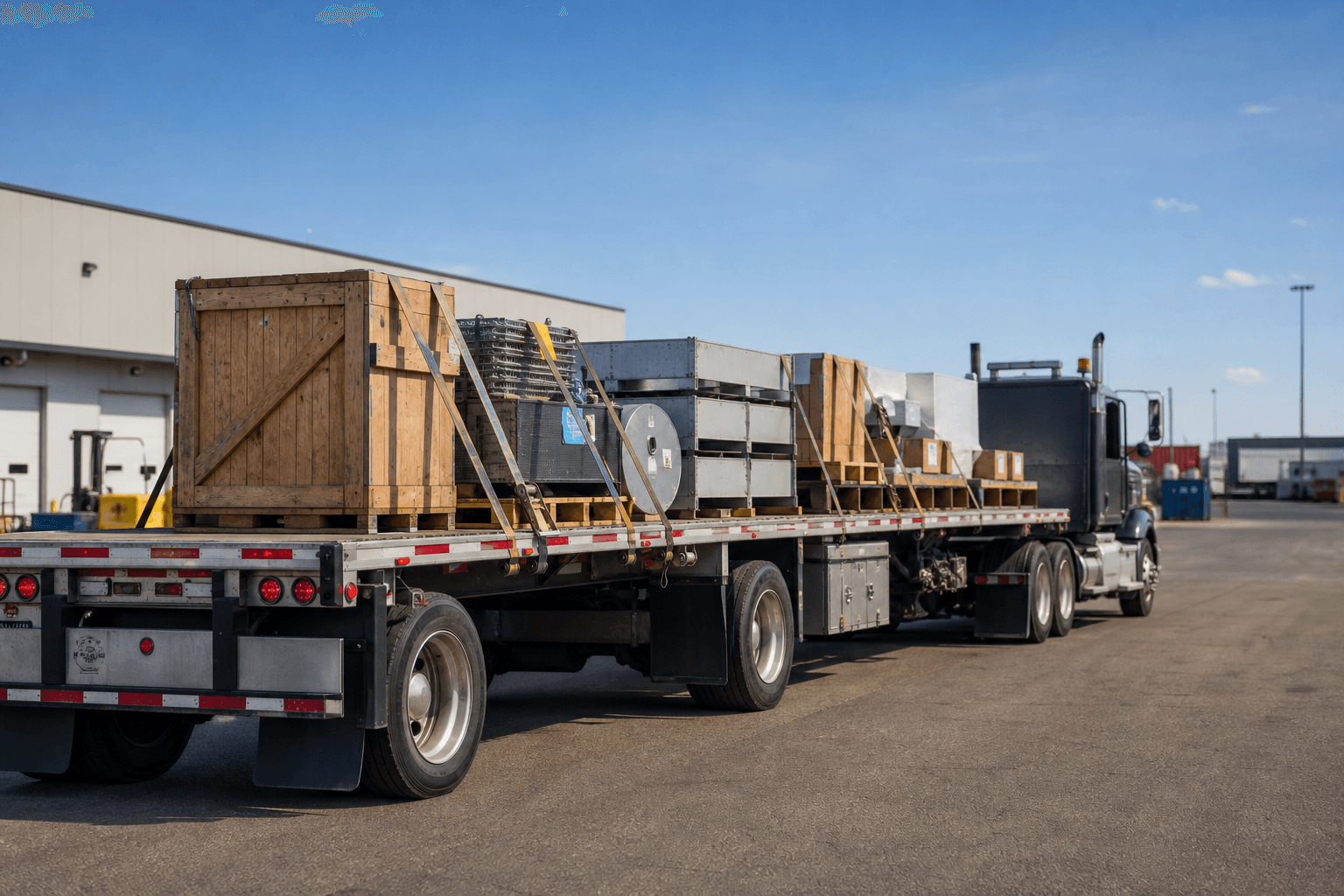
What Should You Check Before Choosing LTL Consolidation?
LTL consolidation can be useful when several compatible shipments share a region or route, but shipment count alone is not enough to justify it. Freight compatibility, delivery windows, routing, transfer requirements, documentation, insurance, and total cost all need review first.
LTL consolidation combines multiple less-than-truckload shipments within a geographic area into one coordinated truckload movement. The U.S. EPA identifies potential cost and carbon-emission benefits because fewer trucks may be used, but those outcomes are not automatic for every lane. EPA SmartWay guidance explains the consolidation model and its potential benefits.
Quick summary

- Consolidation is most suitable when shipments have compatible handling needs, overlapping origins or destinations, and coordinated delivery windows.
- The main risks are mismatched deadlines, incompatible freight, unsuitable routes, unexpected transfer or storage charges, and incomplete documentation.
- Compare standard LTL, consolidated LTL-to-truckload movement, and direct truckload service using total cost and service requirements.
- Before requesting a quote, gather commodity details, dimensions, weights, locations, timing, handling instructions, border information, and insurance expectations.
How LTL consolidation works
In ordinary LTL shipping, a smaller shipment moves through an LTL carrier’s network or planned route. It may be handled alongside other freight as it travels toward its destination.
With LTL consolidation, a shipper or logistics provider groups multiple LTL shipments in a geographic area and arranges a combined truckload movement. Each shipment retains its own consignee and delivery requirements, but part of the transportation plan treats them as one coordinated load. SmartWay material also notes that consolidation strategies can involve rail or ocean transportation in some circumstances. The EPA’s freight strategy overview describes these arrangements.
The practical question is whether the coordination involved creates a better overall fit than moving each shipment separately. That requires a review of handling, timing, route design, transfers, and delivery obligations.
Compare the available shipping options

| Option | How it works | What to check |
|---|---|---|
| Standard LTL | Individual smaller shipments move through an LTL service. | Service levels, accessorial charges, handling, and delivery requirements. |
| Consolidated LTL-to-truckload | Compatible LTL shipments are coordinated into a combined truckload movement. | Transfer point, delivery sequence, handling plan, and total cost. |
| Direct truckload | A truck is assigned to a dedicated movement between the planned origin and destination. | Equipment, loading requirements, route constraints, and schedule assumptions. |
No option is automatically faster or less expensive. Consolidation may reduce unnecessary truck movements in suitable circumstances, while additional pickup, transfer, storage, or coordination requirements can change the result.
Mistake 1: Combining freight that does not belong together
Assess the complete load rather than simply counting shipments. Weight, dimensions, packaging, loading method, fragility, securing requirements, and compatibility determine whether freight can share equipment and handling steps.
This is especially important for heavy machinery, oilfield equipment, containers, steel pipes, agricultural machinery, grain, and seed. Open-deck or specialized freight may require equipment and loading plans that do not align with other goods. Ask the carrier to review the full freight profile before confirming that consolidation is practical.
Mistake 2: Ignoring delivery-window differences
A consolidated load may involve several pickup and delivery appointments. If one shipment is urgent, requires direct delivery, or must arrive for a tightly scheduled site activity, combining it with flexible freight can create a service conflict.
Record the earliest and latest acceptable delivery dates, appointment requirements, receiving hours, and consequences of delay for every shipment. If those requirements do not overlap, standard LTL, direct truckload, or hot shot expedited service may be more appropriate for part of the freight.
Mistake 3: Treating geography as an afterthought
Consolidation depends on useful geographic overlap. Similar origins may not help if destinations are on unrelated routes, and similar destinations may not help if pickups are widely separated.
Review every location, route direction, shipment frequency, border crossing, and proposed transfer point. For Canada-USA freight, confirm that routing and documentation support the intended border movement. The EPA describes geographic grouping as a defining part of LTL freight consolidation. SmartWay’s overview provides additional context.
Mistake 4: Comparing base rates instead of total cost
A line-haul rate may not represent the full cost of a consolidated move. Compare pickup and delivery legs, cross-docking, storage, transfer handling, rehandling, accessorial charges, border coordination, and special loading or unloading requirements.
Also consider the cost of a missed appointment or an extra handling step. Potential consolidation savings should be assessed against the actual service design, not assumed from a lower base rate. The EPA identifies possible cost benefits, not guaranteed savings, from using fewer truck movements. Review the SmartWay consolidation material.
Mistake 5: Overlooking cross-docking and storage
Some plans need a location where freight can be received, sorted, transferred, staged, or held before the next transportation leg. That may involve cross-docking, short-term storage, or warehousing.
Ask where the transfer will occur, how long freight may remain there, what handling is included, and how goods will be protected and identified. Confirm that the facility can accommodate the freight’s dimensions, packaging, and loading method. Temporary space should be confirmed, not assumed.
Mistake 6: Failing to plan documentation and visibility
Consolidation creates more coordination points, so shipment information must remain accurate from pickup through final delivery. Prepare a description of each commodity, piece count, dimensions, weight, packaging, consignee, delivery instructions, and appointment details.
Ask how individual shipments will be identified within the combined movement, how handoffs will be recorded, and what tracking updates will be available. For cross-border shipping, confirm who coordinates shipment information and how exceptions will be communicated.
Mistake 7: Assuming protection and contingency plans are automatic
Before freight is combined or transferred, clarify insurance, handling responsibility, claims procedures, and the process for reporting damage or shortage. Do not assume general coverage answers every shipment-specific question.
Ask what happens if a pickup is missed, a delivery appointment changes, a transfer is delayed, or one shipment cannot continue with the combined load. A contingency plan should identify who communicates the change, what alternatives may be available, and how additional costs are approved.
When LTL consolidation may make sense
- Shipments have compatible commodities, packaging, dimensions, weights, and handling needs.
- Origins and destinations share a practical region, route, or transfer point.
- Pickup and delivery windows can be coordinated.
- Recurring volume or predictable shipment frequency supports planning.
- Required cross-docking, staging, or storage is available.
- Documentation, tracking, insurance, and border responsibilities are assigned clearly.
These conditions do not guarantee a better rate or outcome. They indicate that consolidation deserves comparison with standard LTL and direct truckload alternatives.
When another option may be better
Reconsider consolidation when freight is incompatible, delivery timing is highly urgent, or a customer or jobsite requires direct delivery. Hot shot expedited service may suit time-critical moves, while wide-load transportation or specialized flatbed planning may be more appropriate for oversized or unusually heavy freight.
Separate routes, strict appointment requirements, limited receiving hours, and high consequences for delay can also outweigh the potential advantages of combining shipments.
LTL consolidation decision checklist
- Freight: Record commodity, piece count, dimensions, weight, packaging, value, loading method, and securing requirements.
- Compatibility: Identify freight that cannot share equipment because of fragility, shape, weight distribution, or handling restrictions.
- Locations: List pickup and delivery addresses, access restrictions, and receiving requirements.
- Timing: Record readiness dates, delivery windows, appointment rules, and consequences of delay.
- Route: Confirm geographic grouping, transfer points, border crossings, and delivery sequence.
- Facilities: Determine whether cross-docking, staging, container handling, or warehousing is needed.
- Visibility: Establish tracking, handoff records, exception updates, and delivery confirmation.
- Protection: Confirm freight insurance, claims procedures, and transfer responsibility.
- Contingency: Agree on responses to missed pickups, delays, damage, changed appointments, or a failed consolidation plan.
Questions to ask a carrier or logistics provider
- Which shipments would you combine, and what compatibility assumptions support that recommendation?
- Where would freight be consolidated, cross-docked, staged, or stored?
- Which pickup, transfer, delivery, storage, and accessorial services are included?
- How will each shipment be identified and tracked within the combined movement?
- What equipment and loading method are planned for heavy, irregular, open-deck, or specialized freight?
- How are insurance, damage claims, and transfer responsibility handled?
- What information is required for Canada-USA freight?
- What happens if one shipment misses its readiness date or delivery window?
- How does the proposal compare with separate LTL, direct truckload, or expedited service?
How Edmonton-area logistics support can fit the decision
Flying Falcon Logistics Ltd is an asset-based Canadian flatbed and specialized freight carrier based at 2901 - 5 Street Nisku, Alberta. Its services include LTL shipping, long-haul and short-haul transportation, cross-docking, warehousing and storage, logistics planning, and cross-border freight movement across Canada and the United States.
The company handles oilfield equipment, containers, steel pipes, heavy machinery, grain, seed, and agricultural products. Flying Falcon describes freight insurance, SmartWay certification, shipment tracking, and a 98% on-time delivery record as part of its service offering. These capabilities support a fit discussion, but each shipment still requires an individual review.
Frequently asked questions
Is LTL consolidation the same as truckload shipping?
No. LTL consolidation combines multiple LTL shipments into a coordinated truckload movement. Direct truckload generally plans a dedicated movement around one shipper’s freight. Equipment may be similar, but handling, delivery sequence, and cost assumptions differ. The EPA’s SmartWay overview describes these distinct freight strategies.
When should a shipper avoid LTL consolidation?
Reconsider it when shipments have incompatible handling requirements, unrelated routes, strict direct-delivery obligations, or urgent deadlines. Wide or heavy loads may require specialized equipment, while time-critical freight may be better suited to expedited service.
Can heavy or irregular freight be consolidated?
It can be possible, but the answer depends on dimensions, weight, loading and securing methods, equipment, compatibility, transfer points, route constraints, and delivery requirements. Heavy machinery, pipes, containers, and oilfield equipment may require an open-deck or specialized plan.
What information does a carrier need to evaluate consolidation?
Provide the commodity, dimensions, weight, piece count, packaging, pickup and delivery locations, readiness dates, delivery windows, handling instructions, equipment needs, border details, insurance expectations, and shipment frequency. Include site access restrictions and the consequences of a missed appointment.
Conclusion: Check the constraints before consolidating
LTL consolidation strategies are worth considering when shipments are compatible, geographically aligned, and flexible enough to share a coordinated plan. Potential benefits must be weighed against transfer handling, storage, delivery conflicts, documentation, border requirements, insurance, and contingency planning.
Organize the shipment data, then compare standard LTL, consolidated LTL-to-truckload movement, and direct or specialized transportation. If your freight moves through Edmonton and includes industrial, agricultural, container, pipe, or open-deck loads, discuss the complete service design rather than requesting a base rate alone.
For an LTL or logistics quote covering freight in Canada or the United States, request a quote from Flying Falcon Logistics Ltd with your shipment details and delivery requirements.


