
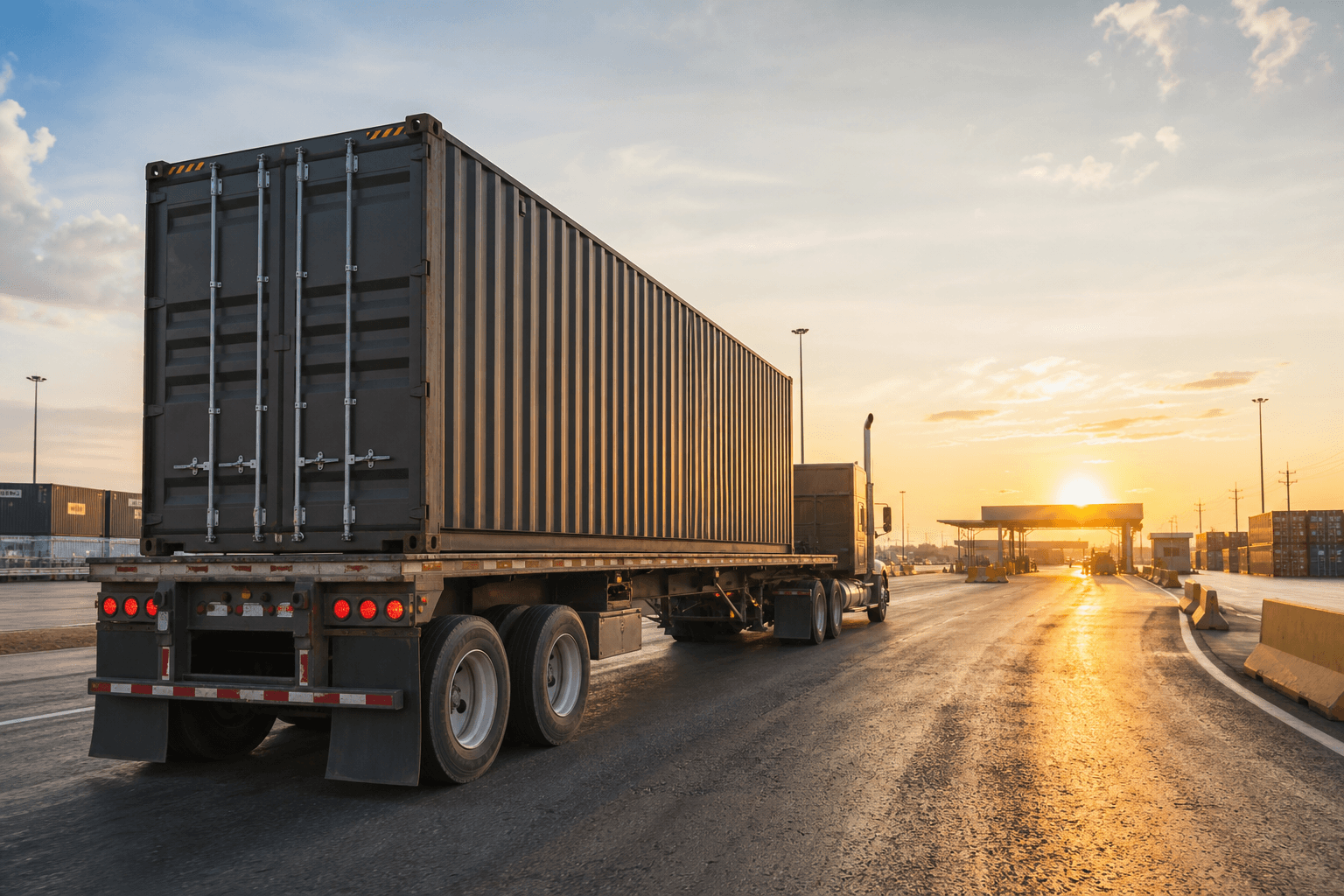
Container transport is not simply a matter of booking a truck. Reliable drayage coordination connects terminal pickup, delivery to a shipper or consignee, unloading or transfer, and the return of the empty container. Each handoff needs clear instructions, timing, documentation, and assigned responsibility.
Before arranging container trucking or intermodal transportation, confirm the complete movement and decide whether direct delivery, cross-docking, or temporary storage best fits the shipment. The following questions can help you prepare an accurate quote and avoid preventable delays.
What container drayage coordination actually includes
Drayage generally refers to the short-distance movement of a container between an intermodal rail terminal and a shipper or consignee. An Alberta government containerized-freight study describes a typical sequence: terminal pickup, delivery to the shipper for loading, return to the terminal, and destination-side pickup and delivery. After unloading, the empty container is returned to the relevant intermodal terminal. Review the Alberta description of container drayage movements for that operating model.
Coordination can involve a terminal, shipper, consignee, trucking provider, warehouse, equipment provider, and other logistics parties. A carrier may move the container, but the shipper still needs to confirm who controls release information, appointments, loading, unloading, documentation, and the empty return.
Do not assume container transport automatically includes customs brokerage, customs clearance, terminal operation, rail service, chassis supply, or demurrage and detention management. Confirm those responsibilities separately for the shipment.
Questions to answer before booking container transport
A quote is more useful when the provider receives the complete operating picture rather than only an origin, destination, and requested date.
Are the origin, destination, and terminal instructions complete?
Record the terminal name and location, pickup reference, container or booking reference, shipper address, consignee address, and the order in which each location must be visited. Include contact names and phone numbers for the terminal, shipping site, receiving site, and any warehouse involved.
Confirm pickup and delivery appointment windows, terminal release requirements, receiving hours, holiday closures, and the time needed to load or unload. Ask whether the destination can accept the container directly or needs an intermediate warehouse or cross-dock.
Site conditions also matter. Note gate restrictions, narrow access roads, loading docks, crane or forklift availability, weight limits, waiting-area limitations, and whether the container can be unloaded at the delivery location. A truck may arrive on time and still be unable to complete the move if the site is not ready.
Are the container and cargo details documented?
Provide the container number or booking reference, cargo description, total weight, dimensions, loading status, and special handling instructions. Explain whether the container is sealed, whether it requires inspection, how it will be loaded or unloaded, and whether the cargo can be transferred to another vehicle.
Dangerous goods require particular attention. Share the classification, shipping documents, and handling instructions with the responsible parties before booking. Alberta explains that provincial and federal legislation establishes standards for safe transportation of dangerous goods, so check the applicable Alberta dangerous-goods requirements rather than relying on a general freight description.
Do not leave weight or cargo information as an estimate when it affects equipment, route planning, loading, safety, or regulatory obligations. If information is outstanding, identify it and agree when it must be supplied.
Who controls appointments, release information, and the empty return?
Establish who confirms that the container is released, who books the pickup appointment, who provides delivery instructions, and who notifies the next party when the container is ready.
Before unloading, confirm who arranges the empty-container return, which terminal or location accepts it, and what evidence of return is required. The answer may depend on shipping-line, rail, terminal, or equipment instructions. Put the responsibility in writing instead of assuming it belongs to the trucking provider.
Which handling option fits the shipment?

Container transport does not always end with direct terminal-to-consignee delivery. Compare the available paths against destination readiness, the required delivery date, acceptable handling, and the cost of adding an intermediate location.
| Option | Best fit | Tradeoffs to confirm |
|---|---|---|
| Direct delivery | The receiving site is ready and the container can move from the terminal to its destination. | Fewer planned handoffs, but missed appointments or limited unloading capacity can disrupt the move. |
| Cross-docking | Freight needs to transfer quickly to onward transport or be consolidated. | Requires synchronized arrival, labor, equipment, labeling, and outbound scheduling. |
| Temporary warehousing | The destination is not ready, freight must be staged, or delivery needs to be separated from pickup. | Adds storage, inventory control, handling, and another coordinated movement. |
Direct delivery
Direct delivery is usually the simplest path when terminal release is confirmed, the receiving site has an appointment, and the site can unload the container on arrival. It minimizes planned transfers and can reduce the number of parties involved.
Its weakness is limited flexibility. If the consignee cannot receive the container, unloading equipment is unavailable, or the appointment changes, the shipment may need a revised plan. Confirm site capacity and the change procedure before relying on a tight schedule.
Cross-docking
Cross-docking transfers inbound freight toward an outbound vehicle with little or no extended storage. It can help when a container must be unloaded, sorted, consolidated, or moved onward without waiting for final delivery capacity.
The approach depends on precise coordination. Arrival time, labor, handling equipment, labeling, inventory records, outbound vehicle, and delivery instructions must align. Cross docking can reduce material handling and storage time, but it does not automatically reduce cost or eliminate risk. Benefits depend on the schedule, freight condition, and execution.
Temporary warehousing
Storage can provide a buffer when the final site is not ready, delivery must be staged, or freight must be held between transport legs. It can separate terminal pickup from final delivery when schedules do not align.
Ask how goods will be received, recorded, accessed, loaded, unloaded, and released for the next move. Confirm storage duration, handling charges, inventory responsibility, and authorization for onward delivery. For an Edmonton-area option, Flying Falcon describes warehousing solutions for storage and cross-dock freight.
Handoff risks that commonly disrupt container movements
Focus the risk review on specific controls. Ask:
- Has the terminal confirmed that the container is released and available?
- Does the pickup reference match the container number and booking information?
- Do appointment windows allow enough time for travel, loading, unloading, and waiting?
- Does the delivery site have the equipment and space required to unload safely?
- Has every party received the correct cargo description, weight, documents, and handling instructions?
- What happens if the destination changes, the container is delayed, or the site cannot accept it?
- Who records delivery, reports exceptions, and confirms the empty-container return?
For an Alberta-based carrier, operating scope also matters. Alberta provides information about commercial-carrier requirements and operating status, including differences that may apply to provincial and extra-provincial operations. Review the official carrier operating-status information and ask which requirements apply to the planned movement.
What to ask a carrier or logistics provider
- Do you handle the requested pickup and delivery locations, and what parts of the movement are included?
- What container, cargo, weight, access, and unloading details are needed before confirming the quote?
- Who coordinates terminal release information and pickup or delivery appointments?
- How are delays, waiting time, destination changes, and failed delivery attempts handled?
- Can the shipment use cross-docking or temporary storage if direct delivery is not practical?
- What tracking or status updates will be provided?
- What insurance, documentation, exclusions, and additional charges apply?
- Who is responsible for the empty-container return, and what instructions must be followed?
Flying Falcon Logistics Ltd’s supplied business information confirms container transport, warehousing, storage, cross-docking, and logistics solutions across Canada and the United States. The specific scope, equipment, appointments, and empty-return arrangements should still be confirmed for each shipment.
Regulatory and operating-status checks
Requirements depend on the freight, route, vehicle, operating scope, and jurisdiction. Alberta’s official information covers commercial-carrier certificates, operating status, safety requirements, and related compliance resources. Use Alberta’s commercial-carrier resource as a starting point for verification.
For freight moving outside Alberta or across the Canada-US border, ask the responsible carrier or logistics parties which provincial, federal, and cross-border requirements apply. Do not treat a general quote or single government page as a complete legal determination.
A practical checklist for requesting a container transport quote
- Pickup and delivery cities, terminal names, addresses, and reference numbers.
- Requested dates, appointment windows, terminal hours, and receiving hours.
- Container number, booking or release information, cargo description, weight, and dimensions.
- Loading and unloading method, site restrictions, equipment availability, and special handling needs.
- Dangerous-goods details and required documentation, if applicable.
- Whether the move requires direct delivery, cross-docking, temporary storage, or onward transport.
- Contacts for the terminal, shipper, consignee, warehouse, and decision-maker.
- The process for delays, changes, status updates, delivery confirmation, and empty return.
This preparation gives a carrier enough context to identify assumptions before the move begins and makes it easier to compare quotes covering the same services.
Frequently asked questions
What is the difference between container drayage and container transport?
Container drayage usually describes short-distance movement between an intermodal terminal and a shipper or consignee, including the relevant empty return. Container transport is broader and may include terminal pickup, regional or long-haul delivery, cross-docking, storage, and onward movement.
Does every container shipment need cross-docking or temporary storage?
No. Direct delivery may be best when the container is released and the receiving site is ready. Cross-docking or storage is relevant when freight must transfer, consolidate, stage, or wait because schedules do not align.
What information does a carrier need to quote container trucking accurately?
A carrier generally needs route and terminal details, dates and appointment windows, container reference, cargo description, weight, dimensions, loading and unloading requirements, site constraints, special regulations, and empty-return instructions.
Who is responsible for returning the empty container?
Responsibility depends on the agreed scope and equipment instructions. Confirm the return location, deadline, authorization, and required proof, then assign the task in writing before pickup.
Conclusion: confirm every handoff before the container moves
The best container transport plan makes every handoff visible. Confirm terminal release, appointments, cargo and site requirements, communication, handling option, and empty return before comparing quotes.
Direct delivery is simplest when the destination is ready. Cross-docking can support a fast transfer, while temporary warehousing can provide flexibility when schedules or receiving capacity do not align. Each option works best when its handling, timing, documentation, and responsibilities are agreed in advance.
Flying Falcon Logistics Ltd is an Edmonton-area asset-based Canadian carrier that transports containers and offers cross-docking, warehousing, storage, and logistics solutions across Canada and the United States. Contact the company with the checklist above to discuss your container movement.


