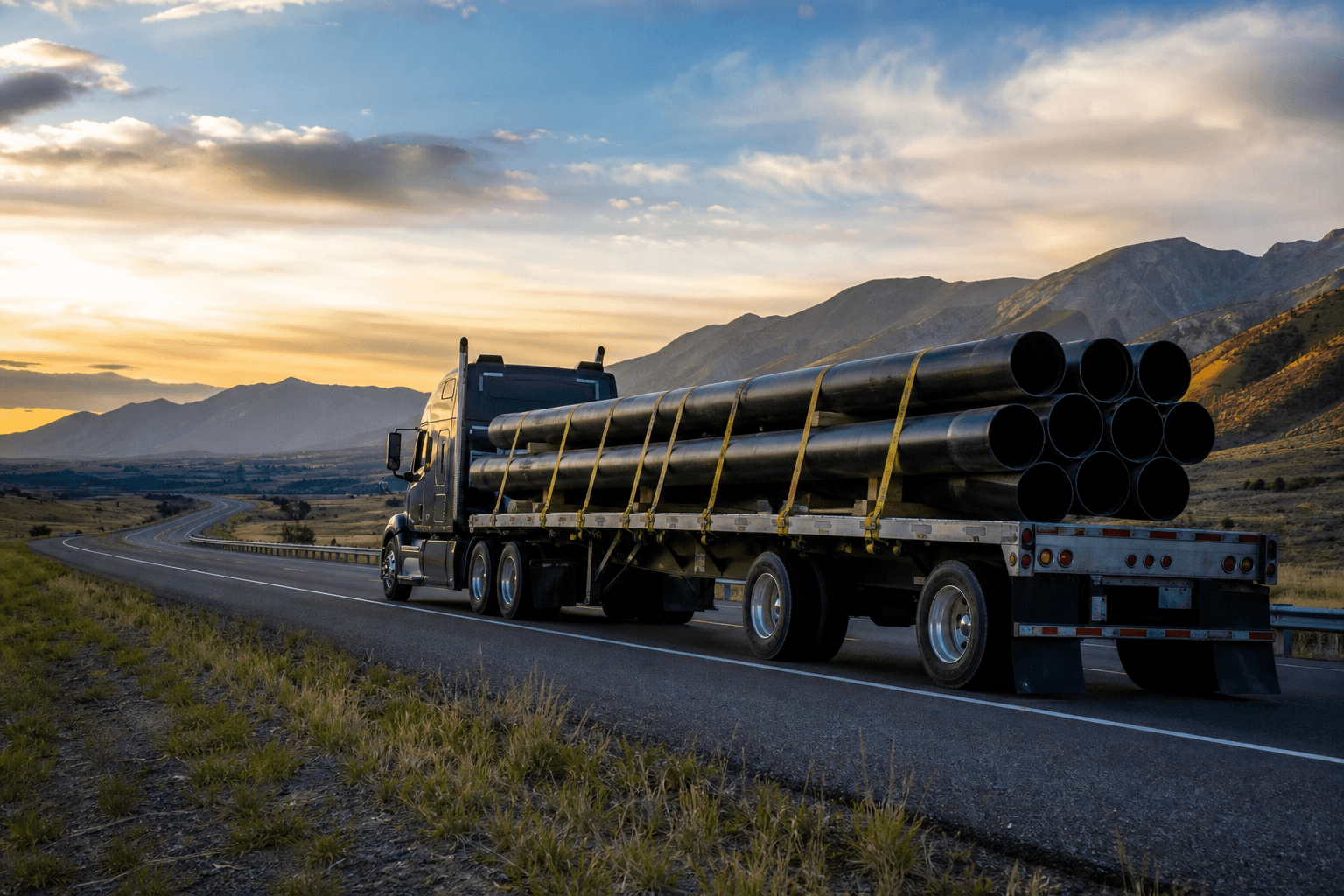
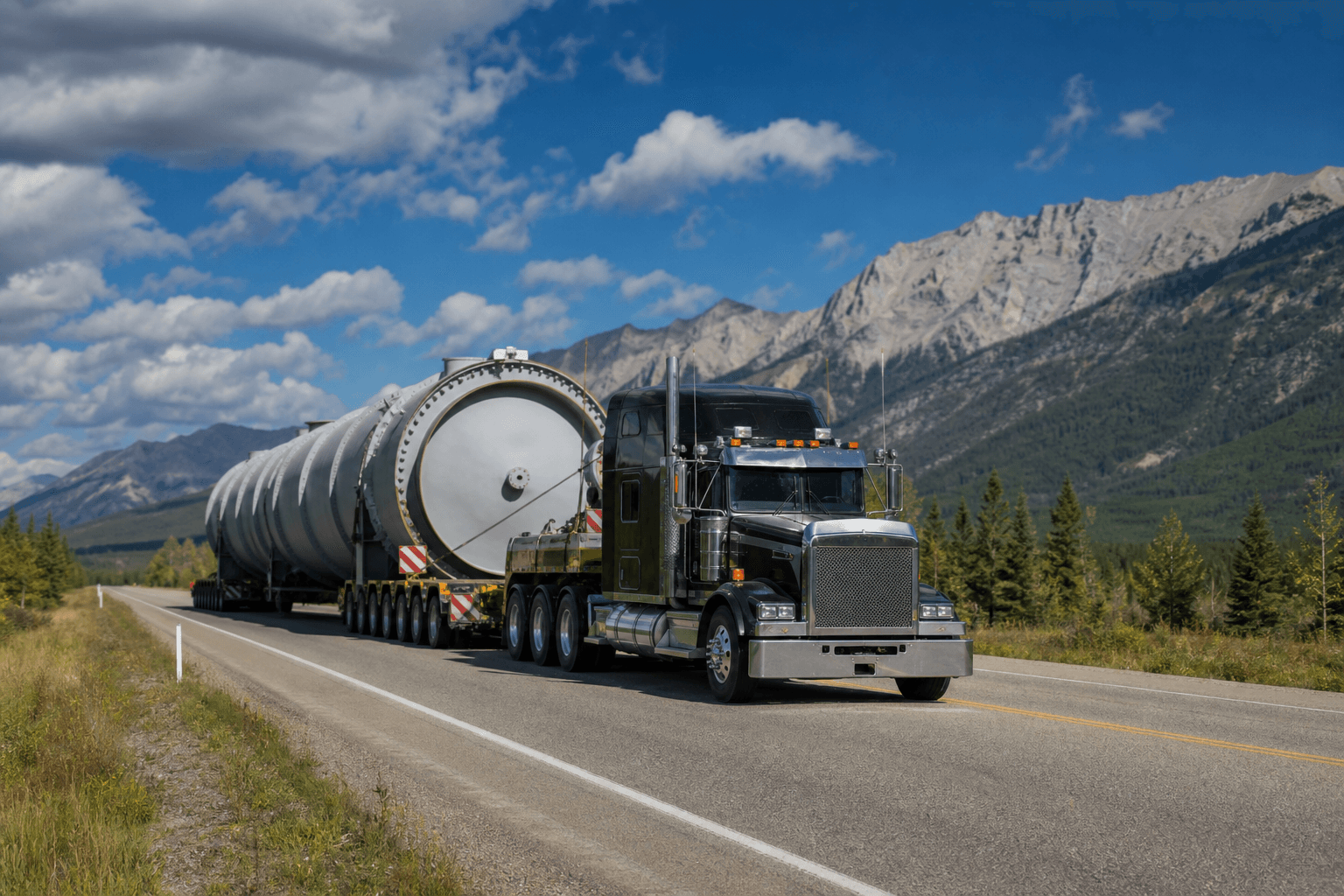
How do you apply for wide-load transport permits in Alberta?
Moving wide, tall, or heavy loads in Alberta requires deliberate planning, accurate documentation, and contact with the authorities that issue oversize and overweight permits. This article gives shippers and logistics managers seven practical steps to confirm whether a permit is required, prepare a compliant application, check municipal route rules, and work with a flatbed carrier to execute the move. It also lists typical permit conditions, who should file the permit, and a compact permit-prep checklist you can use before you call a carrier.
What permits cover wide-load shipments in Alberta
Alberta regulates movements that exceed standard vehicle dimensions or weights through oversize and overweight permits and special weight and dimension permits. For official guidance and to start an application, consult Alberta eServices, Alberta Transportation commercial vehicle permit pages, and the TRAVIS account system. Municipalities may require additional over-dimensional approvals or impose route restrictions, so also check the local truck route information for pickup and delivery cities.
7 essential steps to apply for wide-load transport permits in Alberta
The sequence below is the practical workflow used by experienced shippers and carriers. Each step explains what to do, why it matters, and how it affects carrier planning and execution.
Step 1: Confirm whether your shipment needs an oversize or overweight permit
Start by comparing your loaded dimensions and weights against provincial guidance. If you are close to or exceed typical dimension or weight limits, treat the movement as a permit candidate and continue the permit process. Early confirmation prevents last-minute route changes and unexpected refusals at checkpoints.
Step 2: Gather exact shipment data the permit application requires
Permit applications require precise, verifiable details. Before you contact a carrier or file, collect and confirm:
- Loaded overall length, width and height.
- Gross vehicle weight and, if available, axle weights and axle spacings.
- A clear description of the load and securing method.
- Pickup and delivery addresses and any staging coordinates.
- Requested travel dates and any fixed delivery windows.
- Photos of cargo and the hauling unit if available.
Accurate data reduces permit queries, avoids re-submissions, and helps the carrier plan escorts and route clearances.
Step 3: Check municipal truck routes and local over-dimensional rules
Cities control truck routing and may prohibit or restrict wide loads on certain streets, bridges or interchanges. Confirm local truck routes and over-dimension rules for pickup and delivery municipalities early. Municipal checks can change required escorts, approved travel windows, and staging locations, so include them in your route selection.
Step 4: Plan route constraints, escorts and permit conditions
Permits commonly list movement conditions. Anticipate restrictions such as specific routes, time-of-day windows, pilot or escort vehicle requirements, bridge limits, and lane or shoulder usage. Build those constraints into scheduling and resource planning so the carrier can mobilize pilot vehicles, obtain local clearances, and arrange staging where needed.
Step 5: Apply online or through TRAVIS and submit supporting documents
Alberta accepts permit applications via online services and the TRAVIS account system for licensed filers. Decide who will be the official applicant. Carriers frequently file on behalf of shippers when authorised, which centralizes route surveys and escort coordination. If you delegate filing, provide written authorisation and the full, accurate shipment dataset to the authorised filer.
Step 6: Review permit conditions and confirm logistics with your carrier
After the permit is issued, read every condition carefully. Confirm staging points, loading sequence, escort arrangements, and the permit document version that drivers must carry. If a condition is impractical, request clarification or an amendment from the issuing office rather than improvising on the road.
Step 7: Coordinate execution, staging and contingency plans
Before departure, ensure permit copies are on board and that drivers and pilot teams have a detailed route brief. If you use warehousing or cross-dock staging, align the permit window with loading and departure times. Prepare contingency plans for weather, inspections or last-minute municipal changes and make sure all contact numbers are current.
Typical permit conditions and escort requirements in Alberta
To protect safety and infrastructure, permits often include conditions such as restricted roads, daylight-only or off-peak travel windows, speed limits, required pilot or escort vehicles, lane or shoulder usage rules, and specific bridge or interchange restrictions. The permit document will specify when and where these conditions apply, and carriers routinely advise on practical implications during route planning.
Who should apply: shipper, broker or carrier and how to decide

Choose the applicant based on complexity and in-house capacity:
- Shipper applies: Keeps direct control of paperwork and timing, useful when the shipper coordinates multiple vendors.
- Carrier applies: Carrier-managed filing reduces administrative work for the shipper and bundles route surveys, pilot coordination and municipal contacts into one service.
- Broker applies: Useful when multiple legs or jurisdictions are involved, provided the broker has current permit experience for each area.
If you choose carrier-managed filing, the carrier will need full shipment data, written authorisation to file, and agreement on staging and escort arrangements.
Lead times, planning checkpoints and realistic expectations
Permit review times vary with route complexity, municipal input and cross-jurisdictional requirements. Use these planning checkpoints:
- Initial compliance check and data gathering as soon as the shipment is identified.
- Permit filing once dimensions and preferred dates are firm.
- Route and escort confirmation after permit issuance and before final scheduling.
- Final staging, driver brief and contingency review 24 to 72 hours before movement depending on complexity.
For cross-border or interprovincial moves, plan additional lead time to confirm permits and documentation for each jurisdiction on the route.
Cross-border moves and moving between provinces
Wide-load moves that cross provincial lines or the Canada–USA border require permit checks for every jurisdiction the convoy will enter. Do not assume a single permit covers multiple jurisdictions. Confirm provincial, state or federal requirements for each leg, and plan for any additional inspections or customs documentation when crossing an international border.
Common shipper objections and how carriers reduce friction

Shippers frequently cite cost, lead time and municipal route refusals as concerns. Experienced carriers reduce friction by conducting route surveys, managing permit filings, coordinating pilot vehicles, arranging staged cross-docking, and maintaining municipal contacts that speed approvals. Carrier-managed services are most helpful for time-sensitive or technically complex moves.
Quick permit-prep checklist for shippers
Before contacting a carrier or filing a permit, complete this checklist:
- Confirm loaded dimensions, gross weight and take photos.
- Measure and list axle spacings and individual axle weights if available.
- Provide exact pickup and delivery addresses and any staging coordinates.
- List preferred travel dates and any hard delivery windows.
- Decide who will apply and prepare written authorisation if the carrier will file.
- Check municipal truck routes for pickup and delivery cities.
Having these items ready shortens application cycles and lets the carrier plan escorts and staging with confidence.
Where to apply and who to call in Alberta
Begin permit work with the provincial online services and the TRAVIS account system, and consult Alberta Transportation for commercial vehicle permit guidance. Check municipal truck route pages for pickup and delivery cities to confirm local restrictions. For carrier-managed support, including route surveys, pilot vehicle coordination, and Edmonton-area cross-docking, contact Flying Falcon Logistics Ltd or review the company wide load transport service page on the Flying Falcon website.
Frequently asked questions
How can I confirm whether my shipment needs an oversize or overweight permit in Alberta?
Compare your loaded dimensions and weights to the provincial guidance published on Alberta eServices and Alberta Transportation. When in doubt, treat the move as a permit candidate and gather the data needed to file.
Can Flying Falcon apply for wide-load permits on my behalf and what information will you need?
Yes. Flying Falcon can act as an authorised filer and manage route planning, escort coordination and staging. We will need exact loaded dimensions and weights, axle spacings if available, pickup and delivery coordinates, desired travel dates and written authorisation to file on your behalf. See Flying Falcon’s wide-load transport page for service details.
Do wide-load permits in Alberta always require pilot or escort vehicles?
Not always. Escort requirements depend on the movement and permit conditions. Many over-dimensional permits specify pilot vehicles when required, but the issued permit will state the number and type if they are necessary. Confirm the requirement with the issuing office or your carrier.
How far in advance should I plan and file for a wide-load permit?
Lead times vary with complexity, municipal involvement and cross-jurisdictional needs. File as soon as dimensions and dates are confirmed. For complex, cross-border, or municipal-heavy routes, allow extra time and consider carrier-managed filing to reduce delays.
Final call to action
If you need carrier-managed permit filing, route surveys, pilot vehicle coordination or Edmonton-area cross-docking for a wide-load move, contact Flying Falcon Logistics Ltd or request details on the Flying Falcon wide load transport service page to get a permit-managed quote and schedule.