

How to perform flatbed load securement safely
Before you start: documentation, inspection and equipment checklist
A reproducible securement routine begins before the first strap or chain is attached. Collect the shipment paperwork and confirm responsibility for securement, then inspect the trailer and equipment. Official provincial guidance explains safe practices and special considerations for building materials and open-deck freight, so keep a copy of the relevant cargo securement reference on hand such as the Government of British Columbia Cargo Securement guidance for rule details and examples: Cargo Securement - Province of British Columbia.
Use this pre-load checklist every time you load:
- Shipment documents and bill of lading with declared weight and centre of gravity notes.
- Proof of required permits for wide or heavy loads.
- Trailer inspection: bed condition, anchor points, chains and winch straps are intact and free of corrosion.
- Tie-down hardware inspection: check rated tags, hooks, binders and webbing for wear, cuts, heat damage or missing identification.
- Blocking, dunnage and bracing materials staged and rated for the load type.
- Weather and route plan, including winter precautions for Alberta and Edmonton area operations.
If you operate with a carrier, confirm carrier capabilities and insurance coverage in advance. For an asset-based flatbed partner in the Edmonton area that handles heavy and wide loads, see Flying Falcon Logistics Ltd for service options and cross-docking support at Flying Falcon Logistics Ltd.
Step 1: position the load and set blocking and bracing
Correct placement reduces the number of tie-downs required and limits forward, backward and lateral shifting. Position loads longitudinally to distribute weight over the trailer axles and place heavy items as low and centred as possible. For bundles, use uniform dunnage to create stable stacking surfaces and keep load faces flush where practical.
Apply blocking and bracing before tie-downs in any of these situations: tall or stacked loads, round items such as pipe bundles, machinery with narrow bases, or when the load can slide on wet or icy surfaces. Use timber, fabricated chocks or rated cradle devices that are sized to the cargo. Industry checklists stress that adequate blocking is a primary securement measure and must be fitted so it cannot shift under dynamic loads; see the flatbed securement checklist used by carriers for common blocking practices: Flatbed securement checklist.
Step 2: choose a tie-down method and check working load limit (WLL)
Decide whether direct or indirect securement is required. Direct securement attaches tie-downs directly to the cargo, while indirect securement uses an intermediate method such as wrapping a bundle or using chokers. Both methods are valid when applied correctly. Industry resources summarise these approaches and the contexts where each is appropriate, including FMCSA-based tie-down rules collated by industry guides: Flatbed Load Securement: FMCSA Tie-Down Rules.
Choose chains, straps and binders by their rated capacity. Inspect the identification tags or labels on every strap, chain and binder for the working load limit and manufacturer markings. Do not assume a piece of equipment is rated correctly because of size or appearance. Practical decision criteria are simple: the sum of the effective WLLs of properly attached tie-downs must be appropriate for the cargo weight and expected forces, and anchor points must be rated and free of damage. If tags are missing or illegible, replace the equipment before use.
Step 3: attach chains, straps and binders correctly

Attach tie-downs in a consistent, verifiable order so inspections are straightforward. Follow these steps for common hardware:
- Inspect each anchor point on the trailer for cracked welds, elongation or distortion.
- Route straps or chains to minimise sharp angles. Protect webbing from abrasion with corner protectors or chafe sleeves where contact occurs.
- Use direct tie-downs for individually secured items and apply indirect methods, such as bridle or cradle configurations, for multiple small bundles if appropriate.
- Tighten binders evenly and lock or secure them to prevent unintentional release during transit.
- Make sure hooks and attachments sit squarely on rated anchor points, and never use structural welds or unapproved fittings as lashing points.
Practical inspection points for each piece of equipment include the presence and legibility of the WLL tag, no visible deformation of metal components, no cut or frayed webbing, and binder threads that are in good condition. For additional practical examples of routing and binder use consult industry how-to resources that show common mistakes and correct routing: How to secure a load on a flatbed.
Step 4: tarping and protecting irregular or weather-sensitive loads
Covering the load protects cargo and prevents shifting caused by wind. Choose tarping and tying methods appropriate for the load shape. For pipes and round bundles, use cradle tarps and ensure ties are independent of primary tie-downs so that tarping failure will not compromise load securement.
Consider seasonal risks common in Alberta and the Edmonton/Nisku area, where snow, ice and road spray can increase slippage. Use additional friction-enhancing dunnage, anti-slip mats, and more frequent inspections during cold weather. For oversized or high-profile loads, integrate the tarp system into your overall securement plan and, if permits are required, confirm tarp and containment requirements with the permitting authority.
If you need professional handling, for example for wide or overheight loads, consult a specialised provider. Flying Falcon offers dedicated wide load transport services and can assist with routing, permitting and tarping plans for oversized shipments: wide load transport.
Final inspection: measurable stop points and the pre-trip checklist
Perform a documented inspection with the driver and shipper representative present when possible. Take photos of tie-down tags, anchor points and any blocking or cradles. Use this pre-trip securement inspection list before dispatch. The load must not proceed until every item marked in the "must pass" section is satisfied.
Printable pre-trip securement inspection
- Must pass
- Declared weight and cargo centre noted on bill of lading
- All tie-downs have legible WLL tags and show no damage
- Anchor points and trailer bed are free of defects
- Blocking and bracing prevent fore and aft and lateral movement
- Tarp or cover is secure and independent from main tie-downs
- Document
- Driver name and signature
- Shipper name and signature if present
- Photos of each corner and major tie-down tag
- Notes for any follow-up corrections and the time corrected
Explicit stop points where the load must not move: any missing or illegible WLL tag, damaged anchor points, visible slippage of blocking, unsecured tarpaulin that exposes cargo to wind, or a disagreement between shipper and driver about declared weight or stability. Record corrections, re-inspect, then sign off before departure. The industry checklist approach emphasises tagging and photographic evidence to limit dispute and to support claims if damage occurs.
Special cases and when to hire a specialized carrier
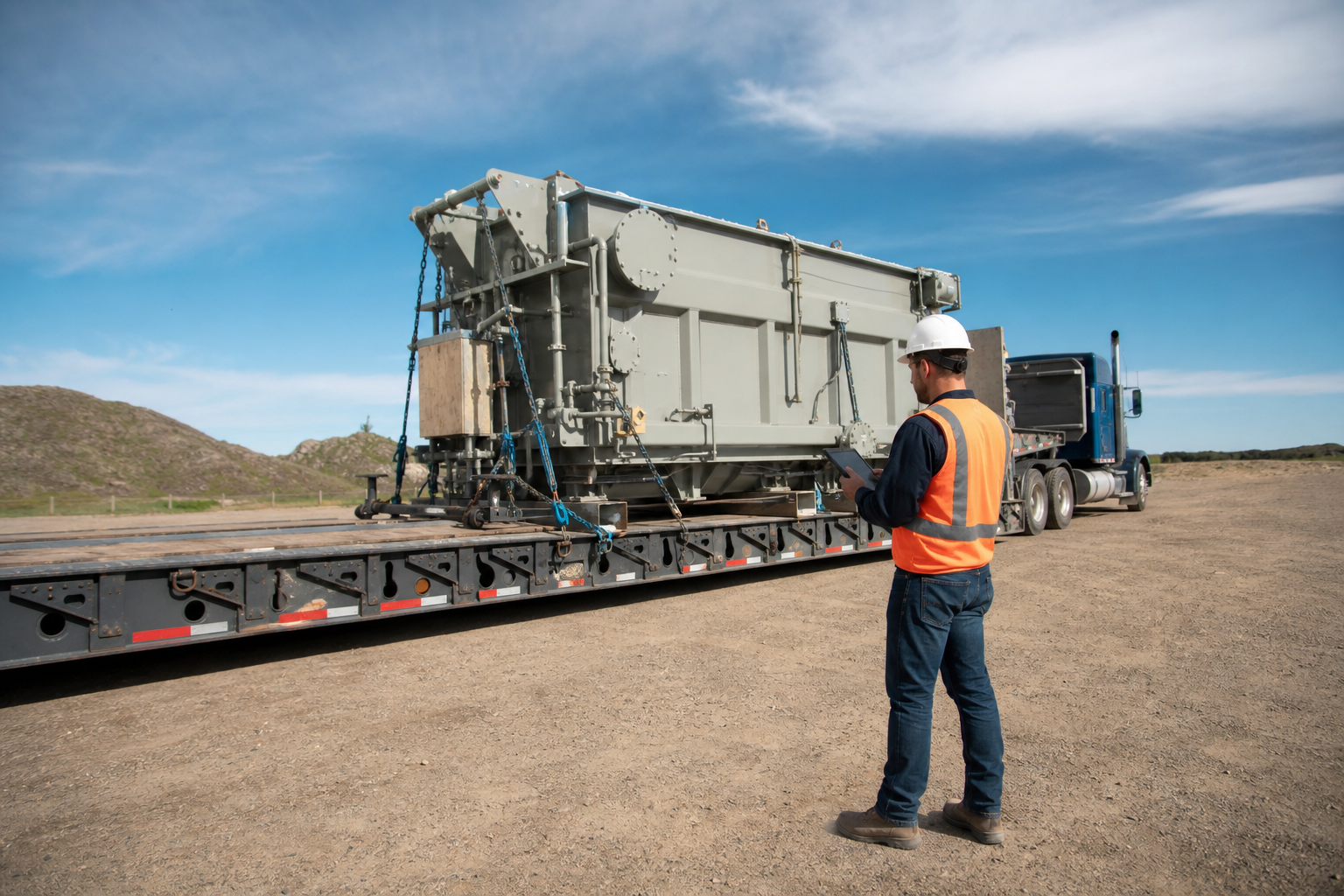
Certain loads demand specialist equipment, permits and experience. Consider outsourcing when any of the following apply:
- The load requires engineered blocking, multiple point lifts, or heavy chains beyond your available equipment.
- The shipment is wide, overheight or superload and requires route assessments, pilot vehicles or police escorts and permits.
- Cross-border moves where familiarity with U.S. and Canadian securement expectations and documentation reduces hold-ups and inspections.
- Time-sensitive hot-shot moves where a specialist carrier has the asset base to prioritise and complete the delivery safely.
Specialised flatbed and heavy-haul carriers provide certified equipment, experienced drivers and permit support. For example, Flying Falcon Logistics Ltd operates as an asset-based flatbed and wide-load carrier in the Edmonton–Nisku area and offers coordinated cross-docking and permitting assistance for oversized freight. When in doubt about your ability to meet securement or permitting demands, hire a specialist rather than risk cargo loss or regulatory penalties.
Common objections and practical decision criteria
Cost versus safety: securement is an investment in risk reduction. If your available hardware cannot display rated tags or is visibly degraded, replacement cost is small compared with cargo loss, injury or liability. Liability and insurance: document the securement process, maintain photographs and signatures, and carry freight insurance. Flying Falcon lists freight insurance among their service features for added protection for customers.
Time pressure on hot-shot moves: expedited services are viable when the shipper and carrier agree on realistic load securement steps up front. Do not sacrifice proper blocking or WLL checks for speed. Cross-border paperwork: carry weight declarations and securement photos and verify documentation that border officers commonly inspect. Industry securement resources include both Canadian provincial guidance and FMCSA-based references for U.S. moves; consult those documents when planning cross-border shipments.
Quick reference and next steps
Key takeaways you can act on now:
- Always inspect WLL tags and anchor points before loading.
- Block and brace before you tie down, especially for round or stacked loads.
- Use corner protectors and anti-slip materials in wet or icy conditions.
- Document the pre-trip inspection with photos and signatures.
- Hire a specialised carrier when permits, escorts or engineered securement are required.
Authoritative references
Provincial cargo securement guidance and examples are available from the Province of British Columbia in the Cargo Securement section: Cargo Securement - Province of British Columbia. Practical industry summaries of tie-down rules and methods, including FMCSA tie-down guidance, can be found in the flatbed securement guides used by carriers and drivers: Flatbed Load Securement and Flatbed securement checklist. For hands-on how-to examples and routing advice see How to secure a load on a flatbed.
Frequently asked questions
What documentation should accompany a flatbed shipment for cross-border moves
Carry the bill of lading with declared weight and centre of gravity notes, any required permits, and photographic evidence of the securement and WLL tags. Be prepared to show anchor point condition if questioned at inspection.
How do I confirm tie-down equipment meets the required working load limit (WLL)
Confirm the WLL by reading the manufacturer tag or stamp on each strap, chain and binder. Do not use damaged or illegible gear. If a tag is missing or unreadable, replace the item before use.
When is blocking and bracing enough and when must I use indirect securement
Blocking and bracing are primary measures for preventing movement. Use indirect securement when loads are in groups, when direct tie-downs cannot effectively clamp individual items, or when the load profile requires cradle or choker arrangements. If you cannot confidently prevent movement with blocking and direct tie-downs, use indirect securement or consult a specialist.
What should I record in a pre-trip securement inspection to limit liability
Record declared weight, photos of each major tie-down tag and anchor point, signatures from driver and shipper representative, notes on any corrections and timestamps of corrective actions. Preserve the record with the shipping documentation.
How do I decide whether to hire a specialized heavy-haul carrier instead of securing the load in-house
Hire a specialist when the load requires permits, escorts, nonstandard lifting, or when your equipment lacks rated tie-downs and anchor points. If you cannot document WLLs or your driver lacks experience with wide-load securement, outsource to an asset-based carrier with heavy-haul expertise.
For assistance with oversized, heavy or cross-border flatbed shipments and to discuss tarping, permits and coordinated warehousing near Edmonton, contact Flying Falcon Logistics Ltd on their website at Flying Falcon Logistics Ltd.
References: Cargo Securement - Province of British Columbia; flatbed securement checklists and guides used by industry practitioners; carrier resources summarising FMCSA tie-down rules and WLL practice. See official provincial guidance for legal obligations and consult experienced carriers for engineered securement solutions.