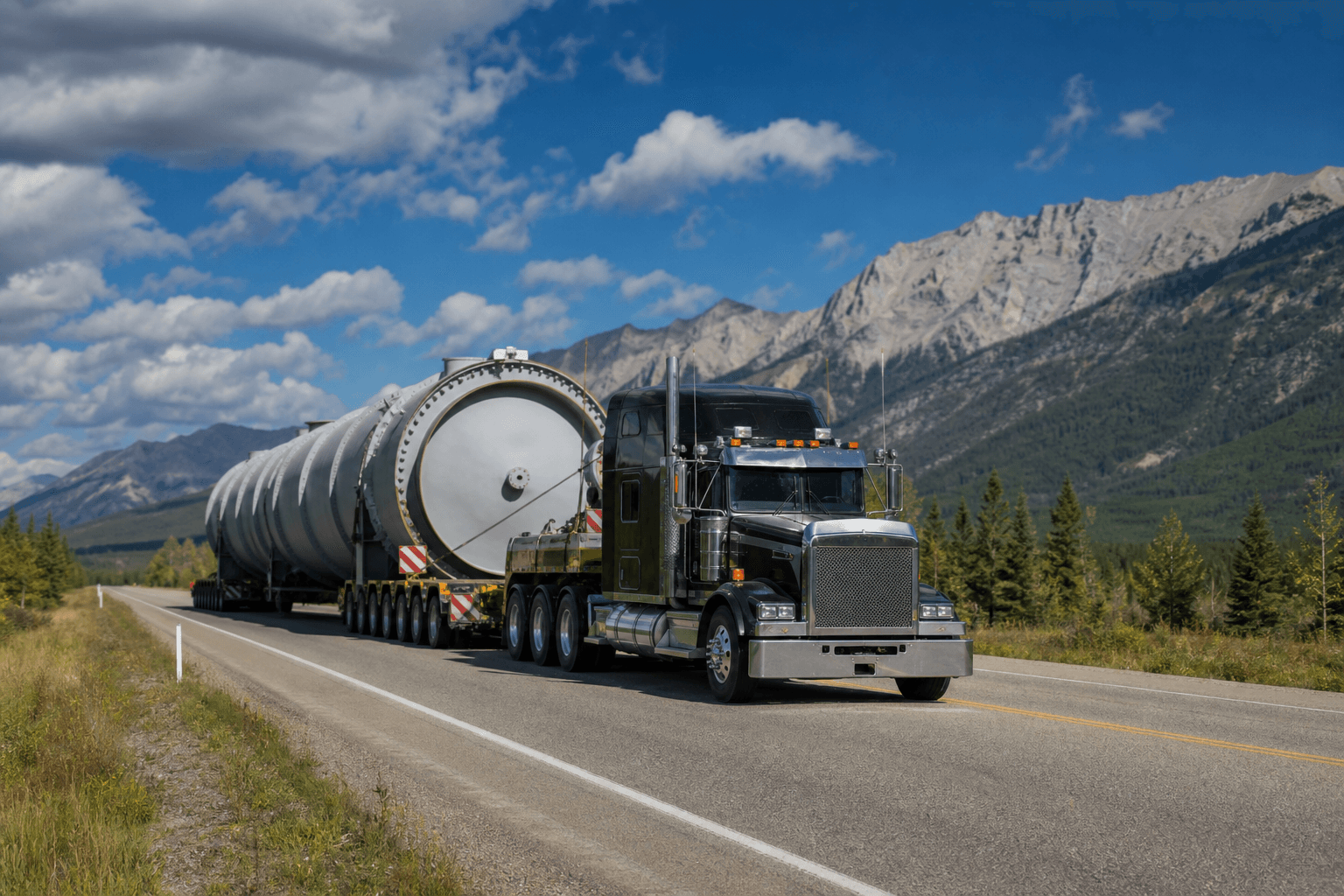


Heavy haul permit guide for Ontario shippers
What a heavy-haul (oversize/overweight) permit is and why it matters
A heavy‑haul (oversize/overweight) permit is the formal authorization a driver or carrier must hold when a vehicle or load exceeds a jurisdiction’s legal size or weight limits. Permits allow regulators to set approved routes, travel times and special conditions — for example, when an escort is required or when bridge restrictions apply — so movements proceed safely and without unexpected infrastructure damage. For a provincial overview and the regulatory purpose of permits, see the Ontario guide to oversize/overweight vehicles and loads.
When a permit is required in Ontario: the legal triggers
Ontario determines whether a permit is required by comparing the vehicle, trailer and load measurements against statutory weights and dimensions. The regulatory thresholds, definitions and exceptions are set out in O. Reg. 413/05 (Vehicle Weights and Dimensions). For a practical walkthrough of permit types and the application process, review Commercial Vehicle Safety Module 10: Oversize/Overweight Permits, which explains the triggers and what permit officers expect to see on an application.
Step-by-step Ontario permit application checklist (what to prepare before you apply)

Assemble a complete permit packet so the permit office can assess routability and safety without repeated clarification requests. The packet should include the following items and data:
- Overall dimensions: total length, width and height, including trailer overhangs, supports and any detachable components; indicate the measurement points used (for example, overall width measured at widest point).
- Weights and axle information: individual axle weights, axle spacings (center-to-center), axle groupings and the proposed gross vehicle weight (GVW). Note any load distribution devices (load equalizers, spreader beams) that affect spacing.
- Vehicle and trailer identifiers: plate numbers, registration details and the legal carrier or owner name plus a daytime contact.
- Insurance evidence: a certificate of insurance that shows the insurer name and policy or certificate number and any required coverage limits; include the broker or insurer contact if the permit office needs verification.
- Clear route map and movement plan: a clean PDF or image map showing origin, destination and the intended route. Mark critical constraints such as tight intersections, known low clearances, or bridges that may be weight-sensitive.
- Photos, diagrams and engineering drawings: images showing the load on the transport unit from multiple angles, and any engineering drawings for nonstandard loads or lifting points.
- Movement timing and constraints: preferred dates and times, allowable windows, and any operational limits such as loading/unloading restrictions or appointment times at the destination.
- Authorized contacts: permit recipients and a 24/7 driver contact for movement-day coordination, with phone numbers and email addresses.
How to format axle spacing and weights for reviewers: provide a simple table or labelled diagram that shows each axle’s measured weight and the center-to-center spacing to the next axle. Include a labeled photo of the trailer underside or an engineering diagram to make the spacing clear. If measurements are estimates, label them clearly and note that final on-site scales will confirm weights before movement.
Carriers frequently assist with permit preparation: they can measure axle spacings, produce permit-ready route maps that include mileposts and bridge identifiers, and compile photos and diagrams. For an example of carrier-led route planning and equipment support used to lower application friction, see LONG HAUL FLATBED SERVICES, which describes flatbed and specialized heavy-haul operational planning.
Lead times, accepted submission channels and important process rules
Processing time varies with route complexity, the need for municipal approvals or bridge authority coordination, and seasonal demand. Submit a complete packet early enough that permit reviewers can ask clarifying questions and attach conditional movement terms without delaying your schedule. Complex urban routes or moves that require third-party approvals typically need additional lead time compared with straightforward highway trips.
Always check the government’s official permit page for current submission methods and payment channels. Notably, Ontario’s permit guidance states that faxed applications or payment information are not accepted after January 1, 2026; use the online and other methods described on the Get an oversize/overweight permit page when you submit. If a municipal or bridge authority must sign off, contact that authority early to learn its preferred submission channel and any internal lead-time needs: see the government’s Get an oversize/overweight permit guidance for current procedures.
To reduce processing delays, submit a single, clearly labelled PDF that contains the route map, photos, vehicle and axle data, insurance certificate and contact list. If a permit office requests additional information, provide it promptly and reference the original application number to keep all correspondence linked.
Route planning and common movement conditions to expect

Permit reviewers evaluate routability and safety; a routable plan reduces the chance of conditioning or denial. Before applying, perform these route-planning steps and include the findings in your packet:
- Bridge and vertical-clearance checks: identify bridges, overpasses and other structures on the route and compare posted restrictions with your vehicle weights and height. When in doubt, include bridge names and nearest mileposts to help reviewers confirm clearances.
- Turning, staging and access analysis: document how the unit will access the pickup and drop-off points, where it will stage for loading or unloading, and how it will negotiate tight turns or restricted intersections; mark any temporary traffic control needs.
- Escort and pilot-car considerations: describe the size and configuration of the escort team you propose (if applicable) and attach pilot-car supplier contact details; the permit may list escort requirements as conditions of movement.
- Municipal restrictions and timing: research local bylaws for restricted streets, peak-hour bans or residential area limits, and include alternative windows and contingency routes in the packet.
Best practice is to record all clearance checks, photos and local contacts in a route packet that reviewers can validate. For moves with high exposure — downtown deliveries, entries to industrial plants, or loads that cross multiple jurisdictions — arrange a physical route survey by a carrier or engineering firm so the permit office receives validated route documentation and fewer conditional attachments.
Frequently asked questions
What exact measurements and documents will Ontario’s permit office ask for?
Prepare overall length, width and height; individual axle weights and axle spacings; proposed gross vehicle weight; vehicle and trailer registration numbers; a certificate of insurance or insurer contact; a clear route map showing origin, destination and constraints; photos or diagrams of the load on the trailer; driver and carrier contact details; and any engineering drawings for atypical loads. That set of fields aligns with Ontario’s application expectations and mirrors the documentation listed in provincial guidance.
Can I submit an Ontario oversize/overweight permit application by fax?
No. Ontario’s published permit guidance indicates that faxed applications or payment information are not accepted after January 1, 2026. Use the current online and other channels listed on the government’s permit page for submissions; check the Get an oversize/overweight permit page for the accepted methods when preparing your packet.
How far in advance should I apply for a single-trip heavy-haul permit in Ontario?
Lead times vary with route complexity, municipal or bridge approvals and seasonal demand. Assemble the full route packet and submit it as early as practical so reviewers can raise clarifying questions and attach conditional movement requirements without delaying your move. For trips requiring multiple municipal approvals or bridge authority coordination, plan for additional days or weeks depending on each authority’s internal processes.
Can my carrier arrange route surveys, escort vehicles or apply on my behalf?
Many carriers provide measurement services, route surveys and escort coordination and will advise on likely permit conditions. Whether a carrier will submit an application on behalf of the shipper depends on the carrier’s stated services and any agreement reached; confirm responsibilities and fees in writing before relying on a carrier to act as your permit agent. Written agreements reduce ambiguity about who supplies which documents and who pays permit fees or escort costs.
Get help with your permit and heavy‑haul planning
If a formal route assessment, route survey or on-site measurement is needed, request a written scope of work from the carrier or consultant who will perform those tasks. A written route assessment should document who is responsible for measurements, route validation and permit-related coordination, and should list any expected additional approvals or third-party contacts that will be required. Keep all scope documents and communications attached to the permit application so the reviewer can quickly verify responsibilities and supplier contacts.
Next step — request a formal quote and route assessment